
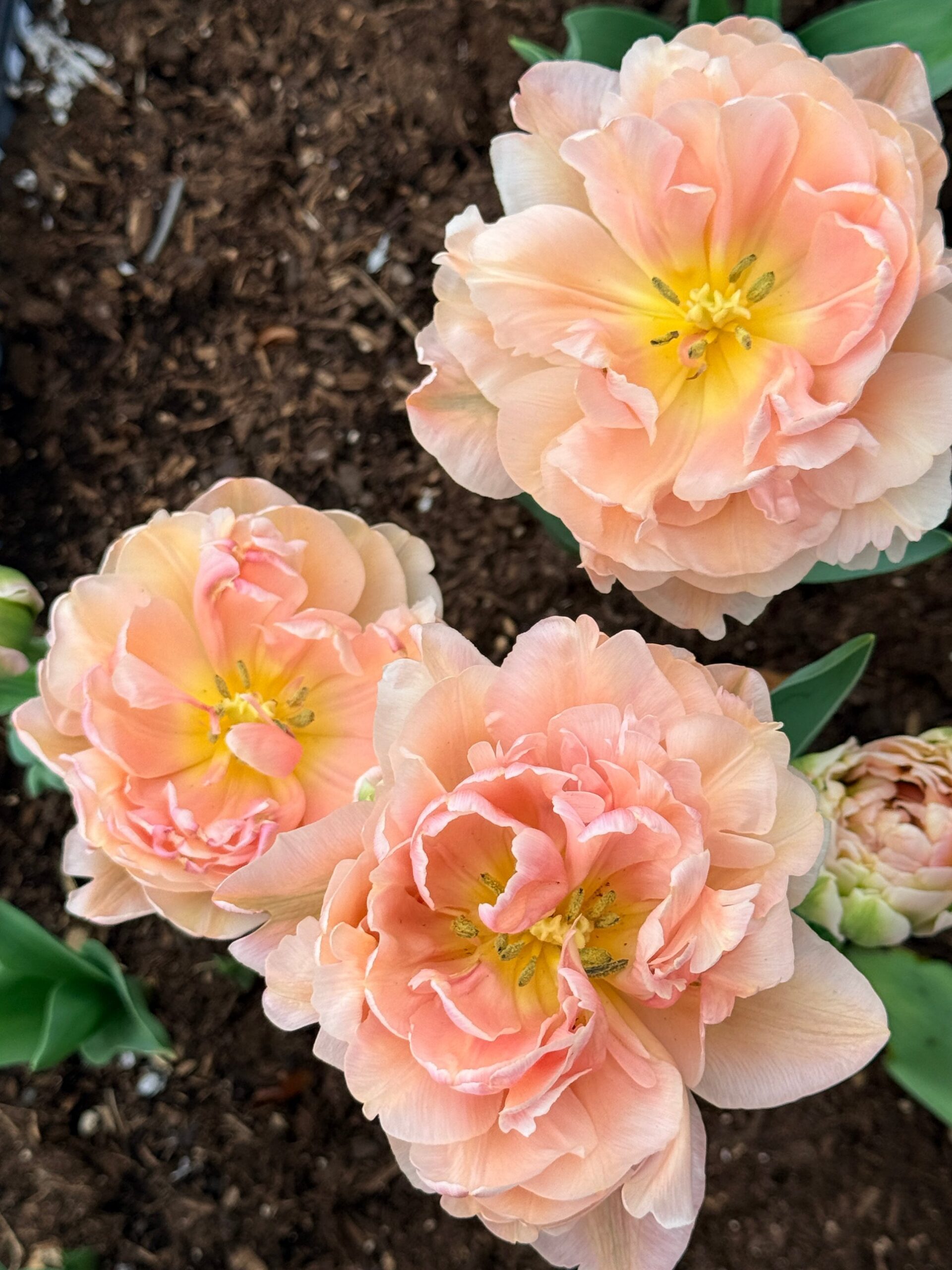
The short version: plant tulip bulbs in fall, two to four weeks after your first frost, once the soil has cooled below about 55°F and before the ground freezes. In the ground, set them about 6 to 8 inches deep. In a crate or pot, pack them in tight. They need 12 to 16 weeks of cold to bloom, so if your winters stay mild, chill the bulbs in the refrigerator first.
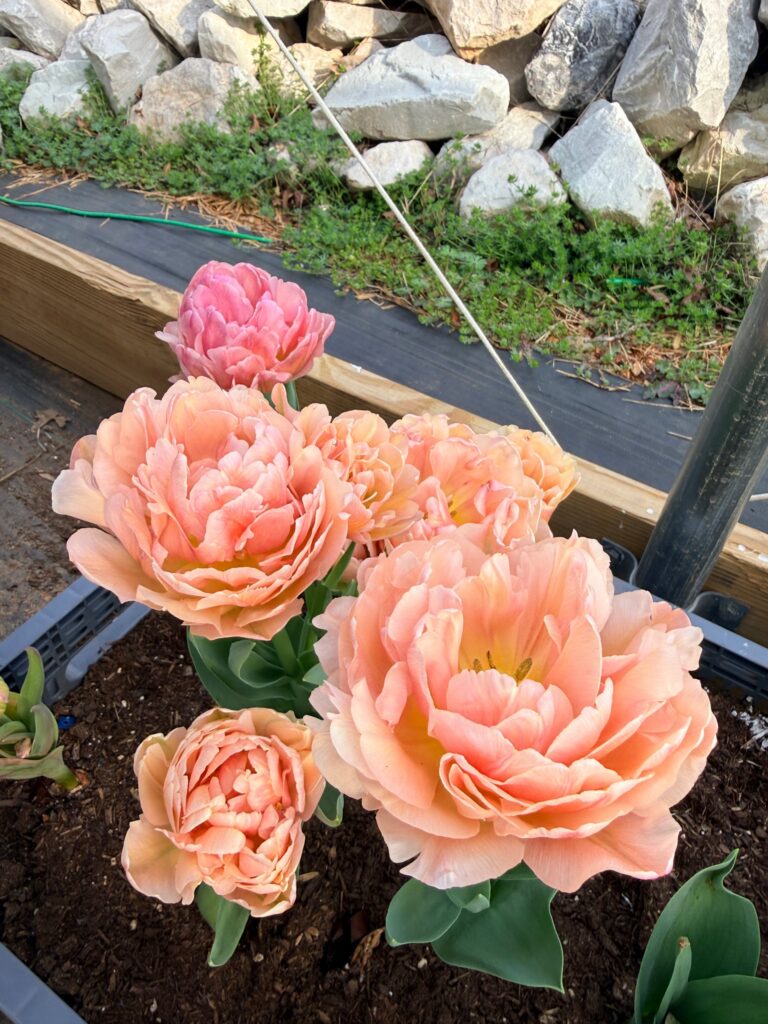
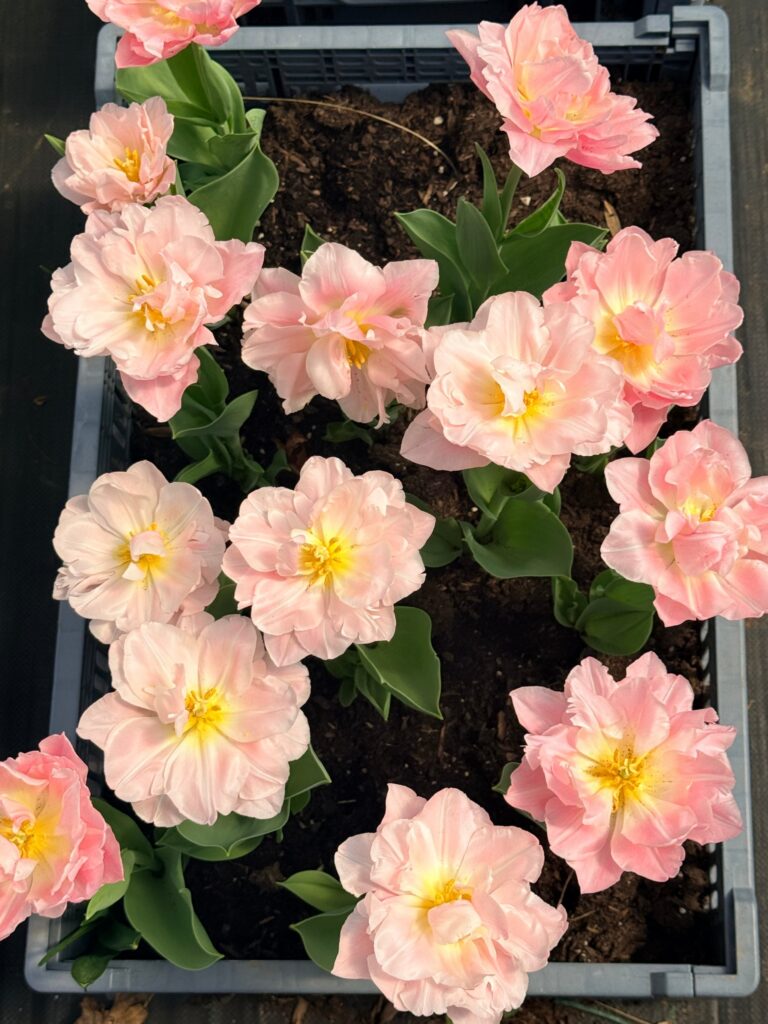
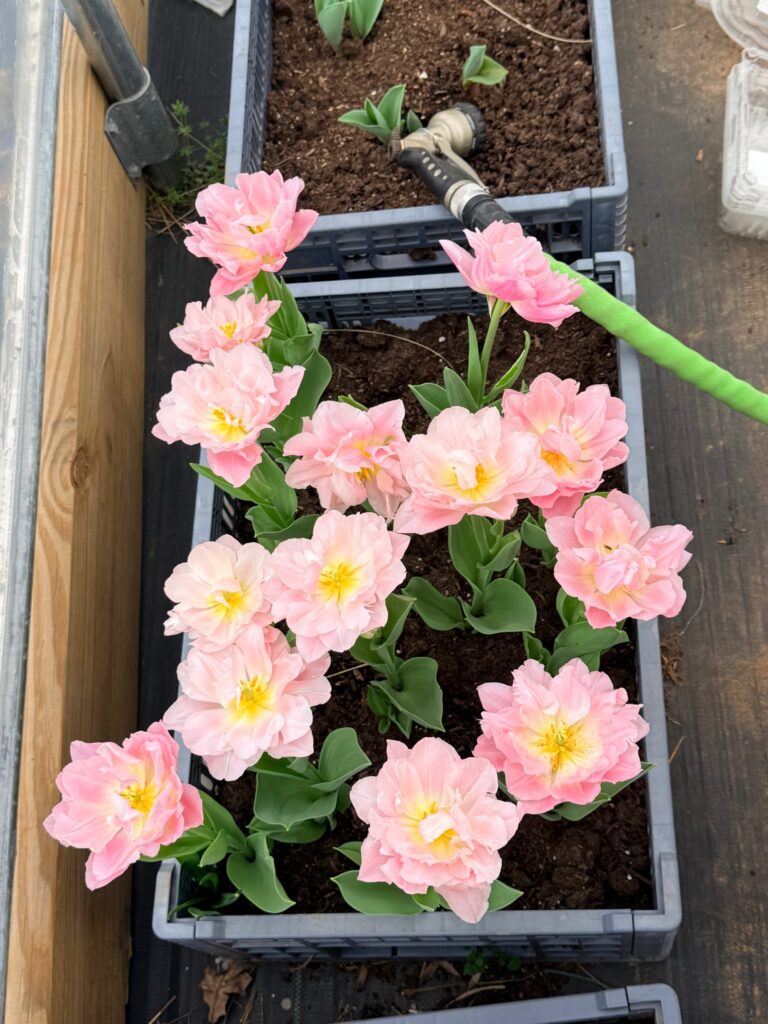
I plant my tulips tight in crates. No measuring, no neat rows and no worrying about which way each bulb went in. They find their way. Then the crates sit in the high tunnel all winter, and in spring they turn into this.
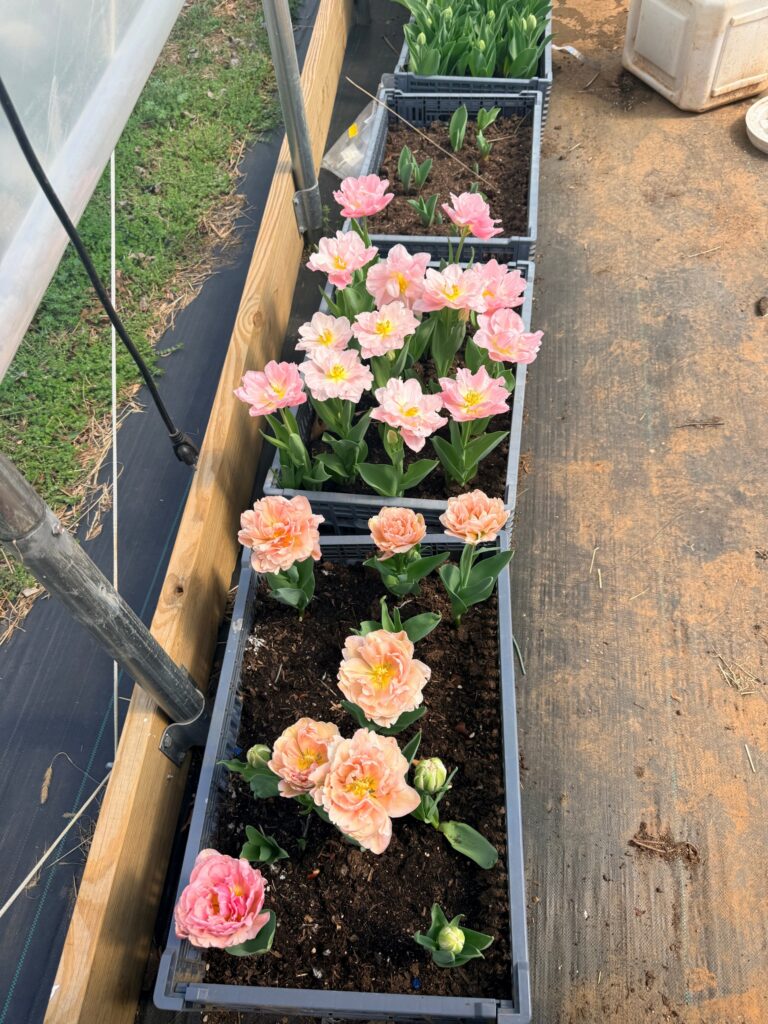
This guide covers all of it: when to plant wherever you live, how I do crates, how to plant in the ground or in pots, the different kinds of tulips worth knowing, why most tulips do not come back, how to cut them so they last, and some of the history that makes tulips one of the strangest flowers in the garden.
When to plant tulips
Tulips are not on a calendar date. They are on your soil. Plant once the soil has cooled to about 55°F, which for most gardens lands two to four weeks after your first fall frost, and any time before the ground freezes solid. For me in East Tennessee, zone 7b, that is usually November.
Up north that window can open in September. Further south it can run into December. If you are not sure of your zone, the USDA Plant Hardiness Zone Map lets you search by zip code. Outside the US, go by your first frost date. The rule still works.
If your winters are mild
Tulips need about 12 to 16 weeks of cold, between roughly 35 and 45°F, to set their flowers. In zones 8b through 10, winter will not give them that. Buy pre-chilled bulbs, or chill them yourself in a paper bag in the refrigerator for 12 to 14 weeks, then plant in December or January. Keep them away from fruit while they chill. Apples especially give off ethylene gas, which can ruin the flower inside the bulb.
How I plant mine: tight in crates
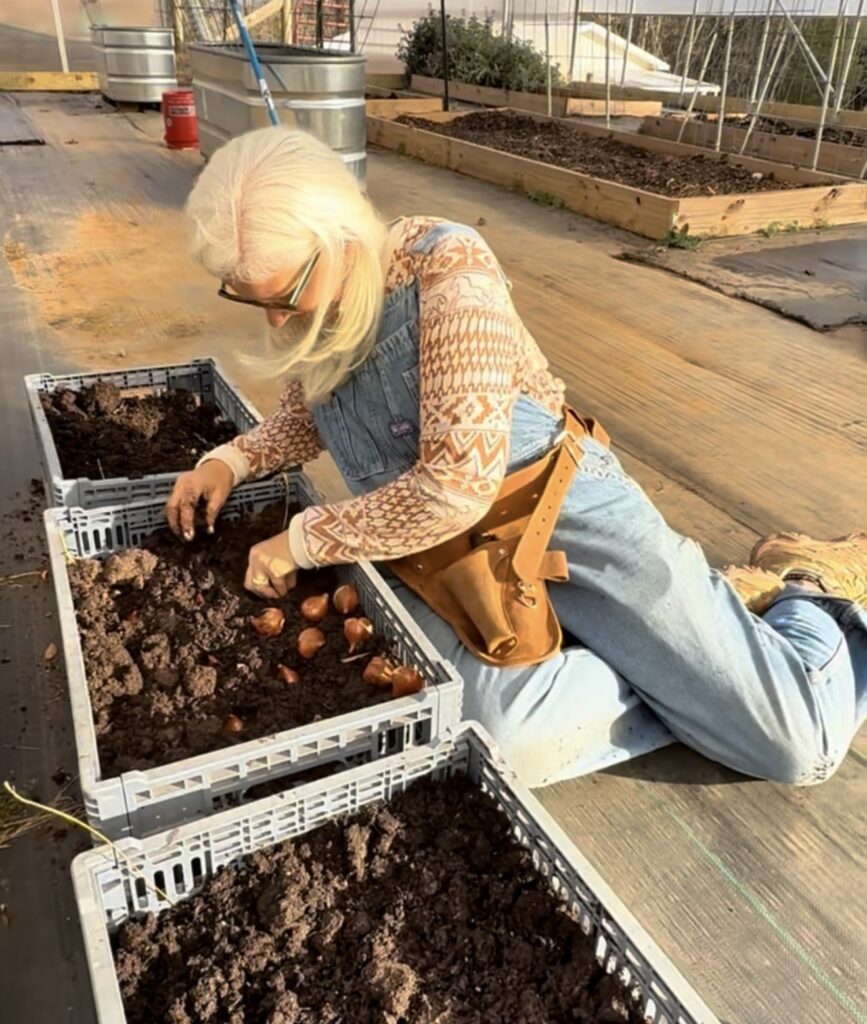
A crate is the easiest way I know to grow tulips, and it is perfect if you want them for cutting. Here is how it works.
- Put a few inches of potting soil or compost in the bottom of a crate or any container with drainage.
- Set the bulbs in shoulder to shoulder. Touching is fine. You can fit far more in a crate than you would ever plant in the ground.
- Pointy end up if you can tell. If you cannot, do not worry about it. A tulip planted sideways or even upside down still turns its stem and comes up. It just takes a little longer.
- Cover them with a few inches of soil and water once, well.
- Leave them somewhere cold but protected for the winter. Mine sit in the high tunnel. An unheated garage, shed or porch works too, as long as the crate does not sit in standing water or freeze solid for weeks.

Why crates? You can move them. You can protect them from voles and squirrels, which love tulip bulbs. You are not digging up a bed in spring. And because you are growing them close and treating them as one-season flowers, you get a lot of stems from a small space.
Planting tulips in the ground
- Sun: full sun, at least six hours.
- Soil: well-drained. Tulips rot in soggy ground, so avoid low spots where water sits.
- Depth: about three times the height of the bulb, which works out to 6 to 8 inches for most tulips.
- Spacing: 4 to 6 inches apart for a garden bed, or closer in a cluster for a fuller look.
- After planting: water once to settle the soil, then let winter do the rest.
Planting tulips in pots
Pots work the same way as crates: pack the bulbs in tight and cover them. The one thing to watch is cold. Soil in a pot freezes much harder than soil in the ground, so in zone 6 and colder, move the pots into an unheated garage or shed for the coldest part of winter. You want them cold, not frozen solid.
Kinds of tulips worth knowing
There are thousands of named tulips, sorted into groups by bloom time and flower shape. These are the ones that matter most for a home garden or a cutting crate.
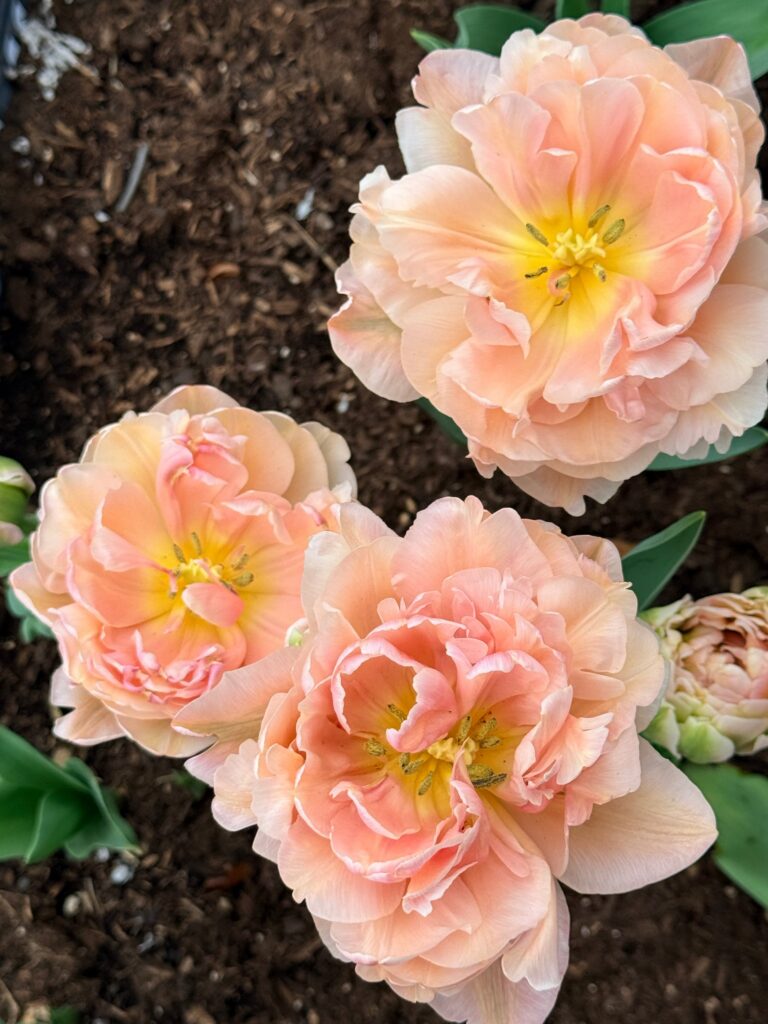
- Double late, or peony tulips. Layer on layer of petals, so full they look like peonies. These are most of what you see in my crates.
- Darwin hybrids. Big, tall, classic tulips. They are the most likely to come back for a few years.
- Triumph. Sturdy, mid-season and reliable, with the widest range of colors.
- Single early and double early. Shorter and first to bloom.
- Parrot. Ruffled, feathered, twisted petals that open wide. Wonderful in a vase.
- Fringed. Petals edged in fine, crystal-like fringe.
- Lily-flowered. Slim, pointed petals that arch outward.
- Viridiflora. Petals streaked with green.
- Species tulips. Small wild tulips that naturalize and come back year after year.
Why tulips do not come back
If you planted tulips once and got fewer and smaller flowers the next spring, nothing went wrong. Most garden tulips are bred for one big show. After blooming, the bulb splits into smaller bulbs that are not big enough to flower. In places with warm, wet summers, they fade even faster.
That is why so many gardeners, me included, treat tulips as annuals and plant fresh bulbs every fall. If you want tulips that return, plant Darwin hybrids or species tulips, deadhead the flowers, and leave the leaves until they turn yellow on their own. The leaves are feeding next year’s bulb.
Cutting tulips for the vase
- Cut when the bud is fully colored but still closed. It will open in the vase.
- Cut in the cool of the morning and put the stems straight into cool water.
- Tulips keep growing after they are cut, sometimes an inch or more, and they bend toward the light. Turn the vase every day, or wrap the stems snugly in paper for an hour in water to straighten them.
- Change the water often and recut the stems.
- Do not put fresh-cut daffodils in the same vase. Their sap shortens a tulip’s vase life. Let daffodils stand in their own water overnight first.
- Growing in crates as annuals? Some flower growers pull the whole plant, bulb and all, and snip the bulb off. You get the longest stem possible, and that bulb was not going to bloom again anyway.
Keeping critters away
Voles, squirrels and chipmunks dig tulip bulbs, and deer eat the flowers and leaves. Crates and pots help, especially with hardware cloth across the top or bottom. In the ground, a cage of hardware cloth around the planting hole works. Planting daffodils nearby helps too, because most animals leave daffodils alone.
A note for animal people: tulips are toxic to dogs, cats and horses, and the bulbs are the most toxic part. Store bulbs where pets cannot get to them, and keep an eye on any dog who likes to dig.
A few things about tulips you might not know
- Tulips are not originally Dutch. Wild tulips grow in the mountains of Central Asia, and they were treasured in the Ottoman Empire long before they reached Holland.
- The name likely traces back to the Persian and Turkish word for turban, for the shape of the flower.
- In the 1630s, the Netherlands went through “tulip mania,” when single rare bulbs traded for more than a house. It is still used as the classic example of a market bubble.
- The famous flame-streaked tulips in old Dutch paintings were “broken” by a virus spread by aphids. Today’s striped tulips are bred to look that way, so they are virus free.
- A tulip flower opens in warmth and light and closes again at night and in the cold.
What to expect, season by season
- Fall: plant. Roots start growing right away.
- Winter: nothing to see. The cold is doing its work.
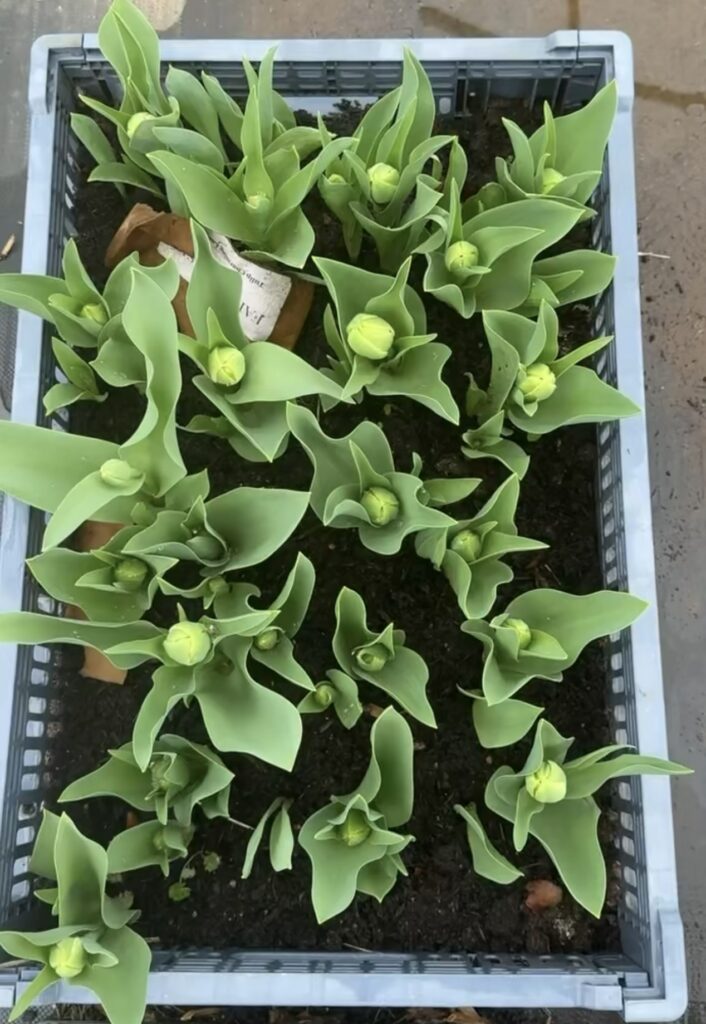
- Late winter: green tips push up. A light frost will not hurt them.
- Spring: buds, then blooms. Early types flower first, and double late tulips finish the season.
- After bloom: cut and enjoy, then pull them and plant fresh in fall, or leave the foliage to yellow if you are hoping for a repeat.
Planting tulips is part of the fall list. Find the rest in our Fall Garden Checklist, and when it’s time to lift your dahlias, the Complete Dahlia Guide walks you through it. For blooms indoors in winter, see the Complete Paperwhite Guide, and for another cool-season flower, Ranunculus 101. Everything we grow is in Growing Flowers.
Tulip questions
When is it too late to plant tulips?
As long as you can still dig, you can plant. Tulips planted in December or even January usually still bloom, just a little later and sometimes a little shorter. A bulb in the ground always beats a bulb left in the bag.
Which way do you plant tulip bulbs?
Pointy end up, flat end with the roots down. If you cannot tell, plant it on its side. Tulips find their way, and even one planted upside down usually comes up.
How deep do you plant tulips?
In the ground, about 6 to 8 inches, roughly three times the height of the bulb. In crates and pots, cover them with a few inches of soil.
Do tulips come back every year?
Most hybrid tulips bloom well once and fade after that. Darwin hybrids and species tulips are the best bets for coming back. Many gardeners treat tulips as annuals and plant fresh bulbs each fall.
Can you grow tulips in containers?
Yes. Pack the bulbs in tight in a crate or pot with drainage, cover them with soil and keep the container cold but not frozen solid over winter.
Do tulip bulbs need to be chilled?
Yes. Tulips need about 12 to 16 weeks of cold to bloom. Most gardens get that naturally over winter. In zones 8b to 10, chill the bulbs in the refrigerator for 12 to 14 weeks before planting, away from fruit.
Are tulips toxic to pets?
Yes. Tulips are toxic to dogs, cats and horses, and the bulbs carry the most toxin. Keep bulbs stored and planted where pets cannot dig them up.


Written by
Lane and Jules Morris
Authors and University of Tennessee faculty writing from our farm in East Tennessee about gardening, the farm kitchen, faith and designing a flourishing life at any age. More about us
