
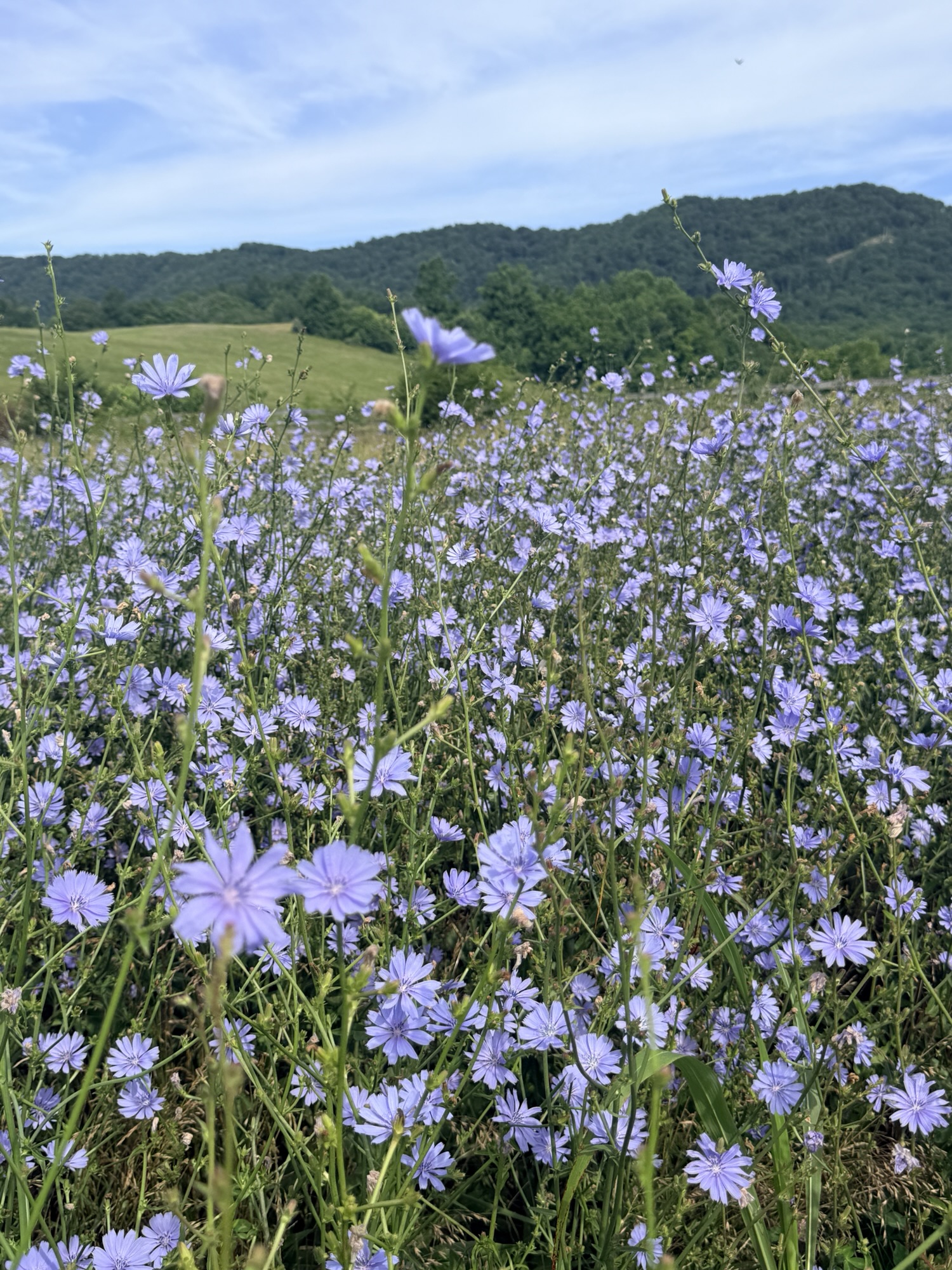
Chicory is a tough blue-flowered perennial you can use from root to bloom. Dig the roots in fall for chicory coffee, pick the leaves in spring before the plant flowers, and snip the flowers in the morning before they close.
Chicory: The Wild Roadside Plant Worth Knowing
Everything we know about spotting it, harvesting it, storing it, and putting every part of it to use, root, leaves, and flowers.
The Root Dug in fall, roasted for coffee, or eaten as a vegetable. | The Leaves Picked young in spring, a bitter green for salads or sautés. | The Flowers That periwinkle bloom, edible fresh, gone by early afternoon. |
Chicory has been used by people for centuries, but most of us know it because of a coffee shortage. During the Civil War, when coffee became scarce and expensive, people started roasting and grinding chicory root as a stand in. It worked well enough that the habit stuck, especially in New Orleans, where chicory is still blended into coffee today.
Chicory (Cichorium intybus) is a tall, wiry perennial in the same family as dandelion and endive. Look for stems reaching 2 to 5 feet, topped with flowers in a soft periwinkle blue (occasionally pink or white), with petals that look almost shredded at the edges. It thrives in poor soil and full sun, which is exactly why you’ll find it crowding roadsides, ditches, pastures, and field edges all summer. One quirky detail, the flowers open in the morning and close by early afternoon, so if you’re out hunting for it, go before noon.
The Root
The most useful part of the plant, and the one behind that famous cup of coffee.
The Leaves
A bitter green that’s easy to overlook until you know what it’s good for.
The Flowers
The whole reason you noticed it in the first place.
How to Make Chicory Coffee
The process that got people through a coffee shortage, and stuck around in New Orleans ever since.
Traditionally, chicory is blended with real coffee at about one part chicory to three parts coffee, the same ratio that made New Orleans coffee famous. Brewed on its own, it makes a naturally caffeine free cup.
Just because it’s growing on the shoulder of the highway doesn’t mean it’s the best patch to pick from. Roadside plants can pick up exhaust residue and herbicide spray. When you’re ready to actually harvest for eating, look a little further back, in an untreated field, pasture edge, or ditch away from heavy traffic.
Other Uses and Benefits
Coffee gets the headline, but it’s far from the only reason this plant earns its place.
| Gut friendly root Rich in inulin, a natural prebiotic fiber that supports gut health. |
| Naturally caffeine free A gentle alternative to coffee, any time of day. |
| Traditional digestive bitter Used for generations to support digestion before a meal. |
| Livestock forage Deep rooted and drought tolerant, often planted in pasture mixes for grazing animals. |
| Pollinator friendly Bees are drawn to the flowers all summer long. |
Chicory is part of the same family as ragweed, so if you’re sensitive to ragweed, introduce it slowly. And as with most herbal plants, it’s wise to use it in moderation during pregnancy.
Some of the best things on this farm were never planted. They were just found, growing right where they were always meant to be.
Now that’s BombDiggity.
Chicory questions we get asked
How do you make chicory coffee?
Scrub the roots without peeling them and cut them into roughly quarter-inch cubes. Roast at 300°F for 45 to 75 minutes, stirring every 10 to 15 minutes, until they are dark brown and brittle. Cool completely, grind, and brew like coffee. The traditional blend is about one part chicory to three parts coffee.
When do you harvest chicory root?
In fall, after the first full growing season and ideally after the first frost. Loosen the soil deeply with a garden fork first, because the taproot can run a foot or more.
Can you forage chicory along the road?
We would not eat it from there. Roadside plants can carry exhaust residue and herbicide. Look for chicory in an untreated field, a pasture edge or a ditch well away from traffic.
If you enjoyed this one, you might also like The Complete Herb Guide: How to Grow, Harvest and Preserve 14 Kitchen Herbs and The Complete Hydrangea Guide.


Written by
Lane and Jules Morris
Authors and University of Tennessee faculty writing from our farm in East Tennessee about gardening, the farm kitchen, faith and designing a flourishing life at any age. More about us
