
The short answer: most kitchen herbs want full sun, get cut hardest in the morning, and keep best frozen rather than dried. Woody herbs like rosemary, sage and thyme freeze whole on the stem. Soft herbs like basil, parsley and cilantro freeze chopped under olive oil. Open any herb below for how we grow it, when to cut it, and the best way to keep it.
Every September the porch planter gets away from me. The rosemary is a hedge, the sage has gone wide, and the basil is one cold night away from being done for the year. Throwing it on the compost pile feels like a waste, because it is one.
So this is the whole thing in one place. Fourteen herbs, one at a time, plus everything we have learned about harvesting and putting them up. Tap the herb you are standing in front of.
Jump to your herb
The whole shelf at a glance
| Herb | Lives | Light | Best way to keep it |
|---|---|---|---|
| Basil | Annual, dies at first frost | Full sun | Chopped, frozen under olive oil |
| Chives | Hardy perennial | Full sun | Chopped, frozen dry or in water cubes |
| Cilantro | Cool season annual | Sun to part shade | Frozen in oil, or save the seed as coriander |
| Dill | Cool season annual | Full sun | Frozen; seed heads saved for pickling |
| Lavender | Perennial shrub | Full sun | Air dried |
| Lemon balm | Hardy perennial, spreads | Sun to part shade | Dried for tea, or frozen in water cubes |
| Marjoram | Tender, grown as an annual here | Full sun | Dried, or frozen on the stem |
| Mint | Hardy perennial, invasive | Part shade | Water cubes, or dried for tea |
| Oregano | Hardy perennial | Full sun | Dried, which is the rare herb that improves |
| Parsley | Biennial, grown as an annual | Light shade | Chopped, frozen in oil or water |
| Rosemary | Evergreen shrub, borderline in zone 7 | Full sun | Whole sprigs, frozen flat |
| Sage | Evergreen perennial | Full sun | Whole leaves frozen, or dried |
| Tarragon | Perennial, fussy in Southern heat | Full sun | Frozen; vinegar holds it best |
| Thyme | Hardy evergreen perennial | Full sun | Whole sprigs frozen, or dried |
The herbs, one at a time
Basil annual · soft herb
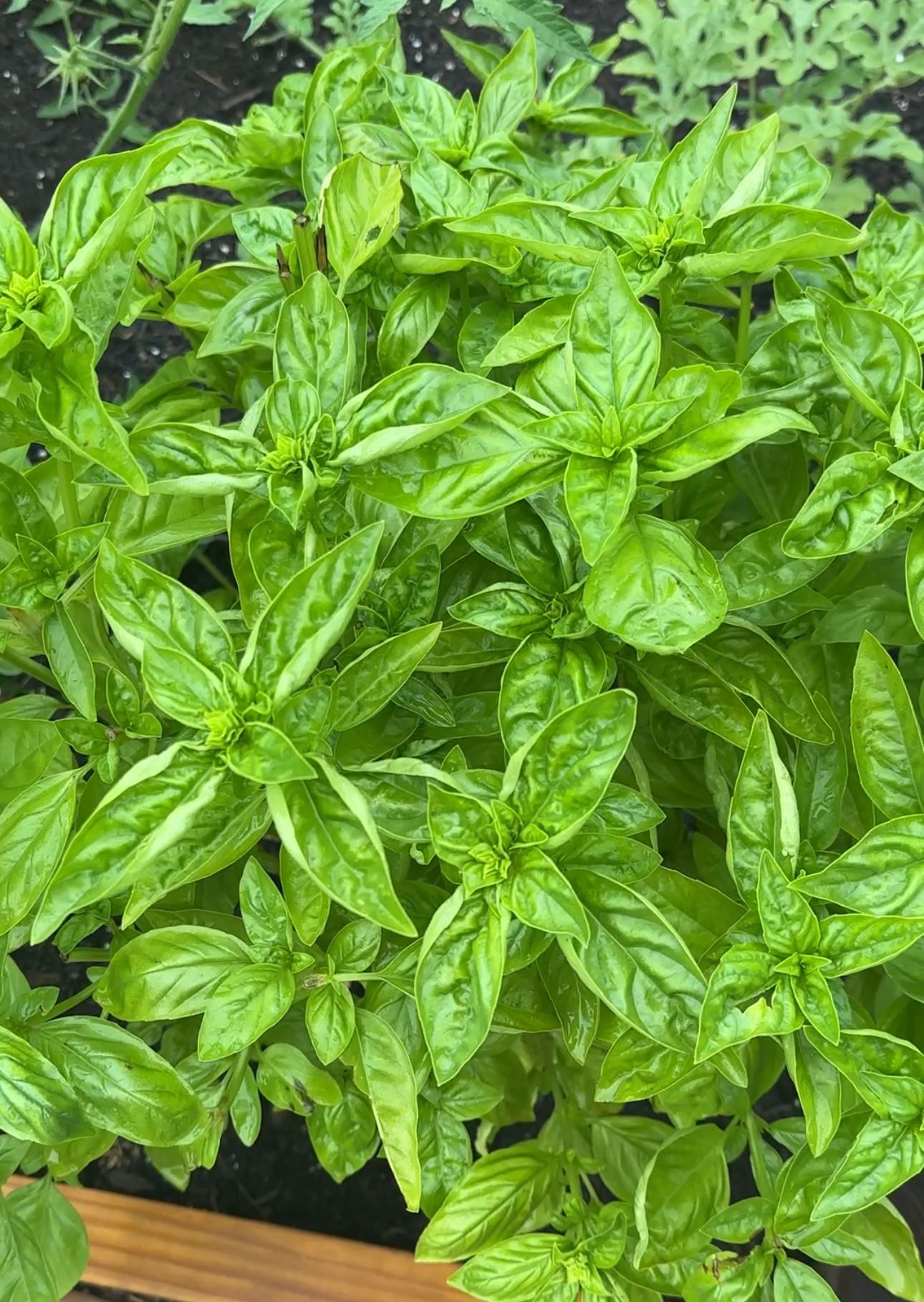
The one everybody plants and the one everybody cuts wrong. Genovese is the pesto basil, Thai basil holds up to heat in a stir fry, and lemon basil is worth a pot of its own.
The part nobody tells youStick a cut basil stem in a glass of water on the windowsill and it will grow roots in about a week. One bunch from the grocery store, the kind you buy for four dollars in March, becomes a whole summer of plants for free. Strip the lower leaves, change the water every couple of days, and pot it up when the roots are an inch long.
Where it wants to liveFull sun and warm soil. Do not set it out until nights are reliably above fifty degrees. Italian types can reach three feet, so give them room.
Varieties worth growingGenovese is the pesto basil and the one to grow if you only grow one. Sweet Italian large leaf gives you more per plant. Thai basil holds its flavor in a hot pan, which regular basil does not. Lemon basil is worth a pot of its own for fish and shortbread. Dark Opal and other purple basils make a stunning pink vinegar.
How to cut itStart when the plant is six inches tall or has six leaves. Cut just above a node, the point where a pair of leaves meets the stem, and the plant branches from there. Take from the top first, never more than a third at a time, and pinch off flower buds the day you see them.
How to keep itChop it and freeze it under olive oil in an ice cube tray. Do not dry basil. It loses almost everything.
In the kitchenPesto, caprese, and torn over a pizza after it comes out of the oven, never before. Basil lemonade. Compound butter rolled in parchment and frozen. Stirred into tomato sauce off the heat so it keeps its perfume.
What goes wrongCold, long before frost. Basil takes chilling injury once nights drop below about fifty degrees and the leaves go black at the edges. When you see a fifty degree night in the forecast, cut all of it.
Chives hardy perennial · soft herb
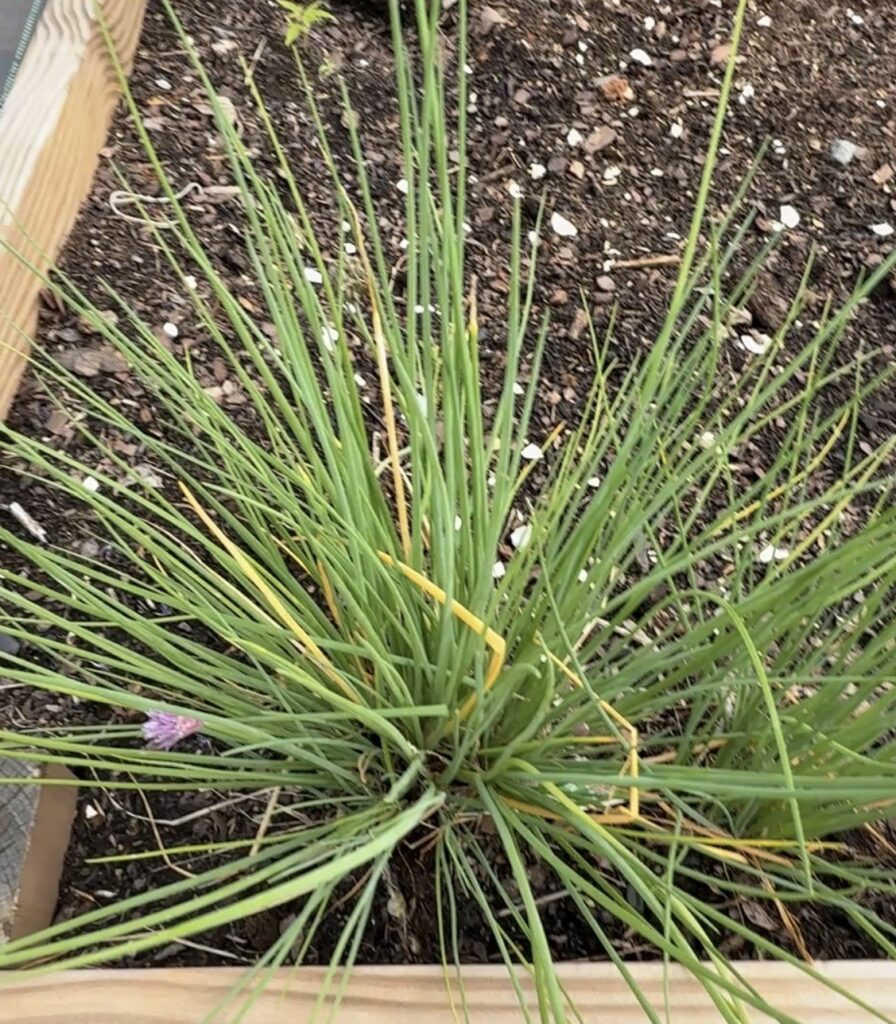
The first green thing up in spring and the last one standing in fall. The purple flowers are edible and make a beautiful pink vinegar.
The part nobody tells youChives are the first thing up in our garden every spring, often pushing through the last of the cold while everything else is still asleep. Old gardeners plant them at the base of roses and apple trees because the onion smell confuses aphids. Whether or not that works, you get a free crop of pink pompoms out of the deal.
Where it wants to liveFull sun, about a foot tall, forms a clump that gets fatter every year. Dig and divide every three or four years or the middle dies out.
Varieties worth growingCommon chives are the thin round ones with purple pompom flowers. Garlic chives are flat leaved with white flowers in late summer, taste faintly of garlic, and self sow hard enough that you will be pulling seedlings for years.
How to cut itSnip individual leaves down at the base rather than shearing across the top. A haircut leaves you a clump of brown stubs for the rest of the season.
How to keep itChop and freeze loose on a sheet pan, then bag, or freeze in water cubes. Dried chives are hay.
In the kitchenAnything with eggs or potatoes. Snipped raw over soup, into sour cream, folded into butter. Do not cook them long, heat takes the flavor straight out. Pull the blossoms apart over a salad, or steep them in white vinegar for two weeks and get a bright pink chive vinegar.
What goes wrongVery little. If it flowers and you want leaves, cut the flower stems out at the base.
Cilantro cool season annual · soft herb
Two crops in one plant. The leaf is cilantro, the seed is coriander, and they taste nothing alike.
The part nobody tells youIf cilantro tastes like soap to you, that is not pickiness, it is your genes. A variation in a smell receptor gene called OR6A2 makes some people read cilantro’s aldehydes the same way they read dish soap. Depending on ancestry, somewhere between four and fourteen percent of people have it. You are not being difficult and you will probably never like it.
Where it wants to liveFull sun to part shade and cool weather. Direct sow, because it resents being moved. Sow a short row every two or three weeks in spring and again from late August on.
Varieties worth growingLook for slow bolt types, which buy you a few extra weeks. Calypso, Santo and Leisure are the common ones. Delfino has feathery leaves that look nothing like cilantro and take longer to bolt.
How to cut itTake outer leaves while the plant is low and bushy. Once it starts to stretch upward it is on its way to seed, so cut the whole plant at soil line and use it.
How to keep itFreeze it chopped under oil. Never dry it. Or let the bolted plants finish and collect the round seeds for coriander, which stores beautifully.
In the kitchenSalsa, tacos, curries, pho, and always added at the very end because heat destroys it. The seed is a different ingredient entirely. Toast coriander seed in a dry pan and grind it for curry, chili and spice rubs.
What goes wrongHeat. It bolts the second summer arrives, and nothing stops that. Plant it early, plant it again in fall, and make peace with the summer gap.
Dill cool season annual · soft herb
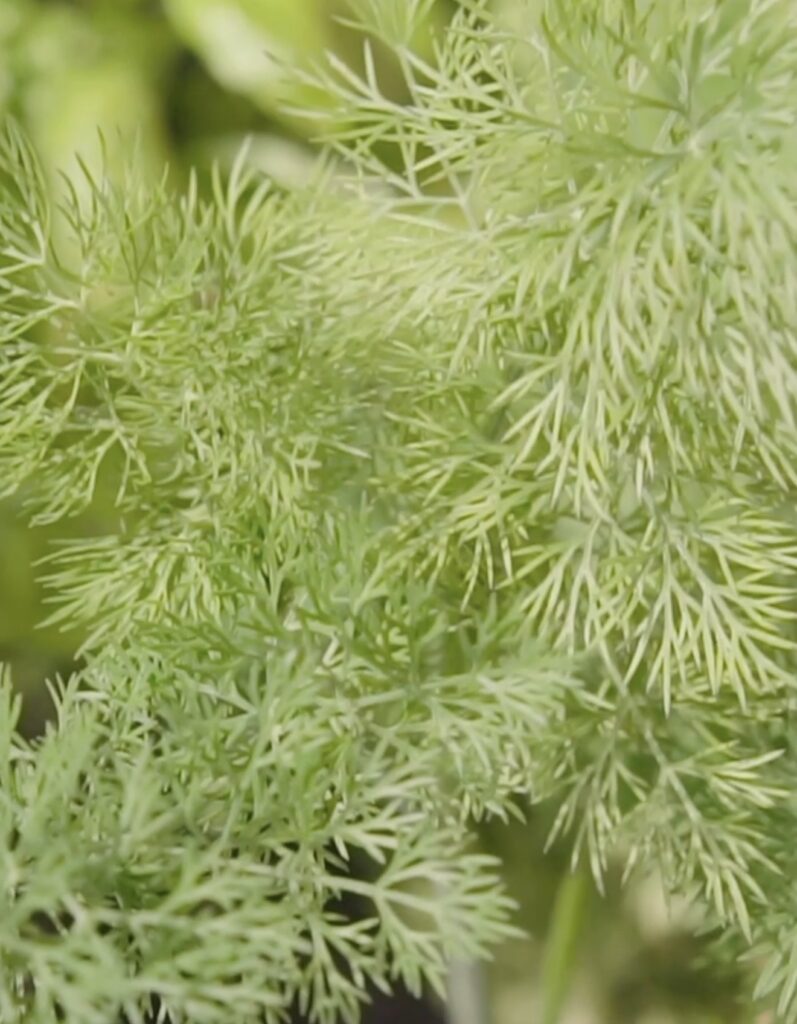
Grow it for the fronds, the seed heads, and the swallowtail caterpillars that will show up and eat some of it. Plant extra and let them have their share.
The part nobody tells youPlant more dill than you need and you will get butterflies. Black swallowtails lay their eggs on dill, fennel and parsley, and the caterpillars are the striped green ones that look like they were designed by committee. They will strip a plant. Let them. That is the trade, and it is a good one.
Where it wants to liveFull sun, direct sown where it will stay, because the taproot hates transplanting. It gets tall, so put it at the back or stake it.
Varieties worth growingBouquet is the standard and gives generous seed heads for pickling. Fernleaf stays compact and does well in a pot. Mammoth gets tall and is grown for seed. Dukat is the leafy one if you want fronds more than heads.
How to cut itSnip the young feathery leaves any time. For pickling, cut whole heads just as the flowers open and the seeds are still green.
How to keep itFreeze the fronds, chopped or whole. Let seed heads dry on the stem in a paper bag and store the seed in a jar.
In the kitchenPickles first, obviously. Then potato salad, salmon, cucumbers in sour cream, yogurt sauces and homemade ranch. The seed goes in pickling brine and rye bread.
What goes wrongIt runs to seed quickly in heat. Succession sow, and let a few plants self seed so you get volunteers next spring.
Lavender perennial shrub · woody herb
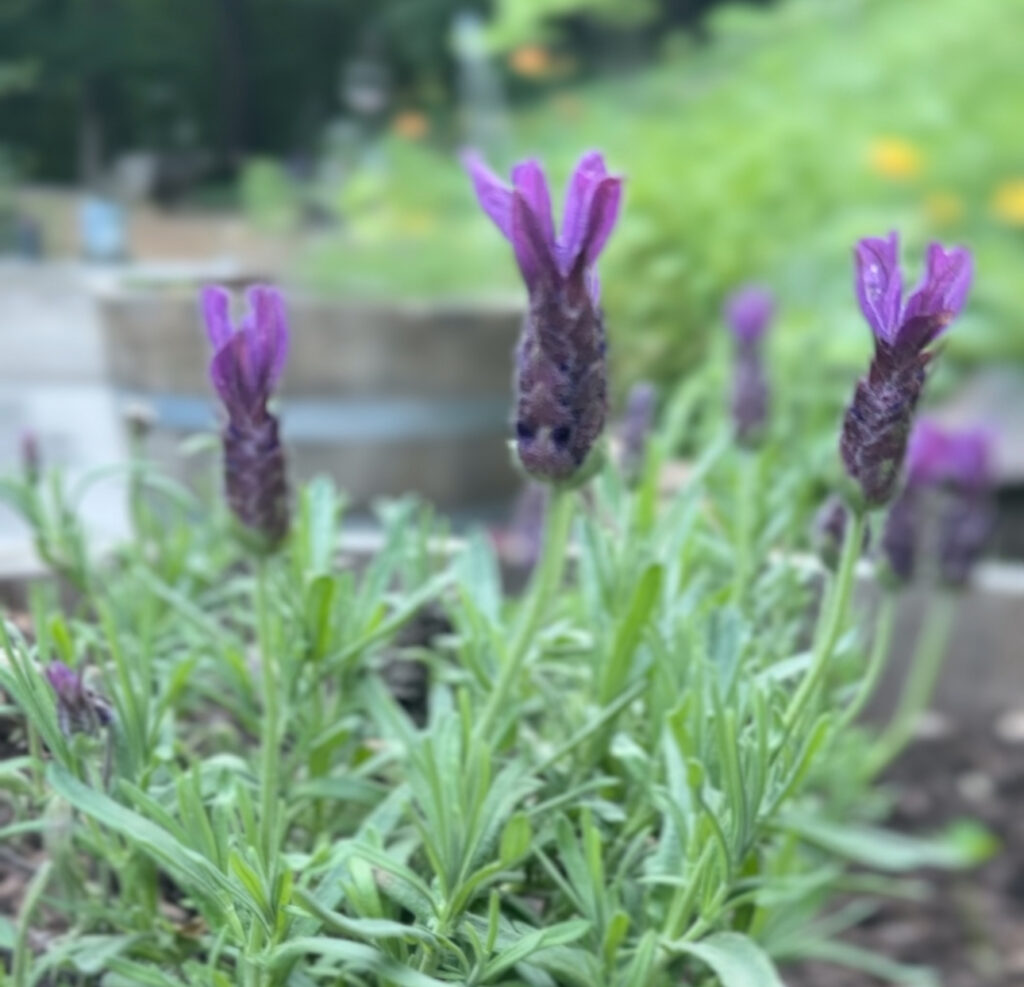
Beautiful, useful, and the herb most likely to die on you in the South. Not because of cold. Because of wet.
The part nobody tells youLavender is in the mint family, same as basil, rosemary and sage. And the oils peak just before the flowers open all the way, which is why commercial fields harvest at bud stage and why the bundle you cut too late never smells as strong as the one you cut early.
Where it wants to liveFull sun, lean soil, and sharp drainage. A raised bed or a gravel mound beats good garden soil every time. English lavenders handle cold best, Spanish and French types handle heat and humidity better.
Varieties worth growingEnglish lavenders are the culinary ones and the most cold hardy. Munstead and Hidcote are the classics. Spanish lavender handles our heat and humidity better but is not what you want in food. Phenomenal and Provence are the ones people here have the best luck keeping alive through a wet winter.
How to cut itCut flower stems just as the lowest buds on the spike begin to open. Shape the plant after flowering, but never cut back into bare old wood, which will not resprout.
How to keep itAir dry it. Bundle the stems tightly, hang them out of direct sun, and strip the buds into a jar once they are crisp.
In the kitchenUse English lavender and use less than you think. It turns soapy fast. Shortbread, lemonade, honey, and sugar left in a jar with a few buds. Everything else it does is sachets, wreaths and making a room smell like summer.
What goes wrongRich soil, heavy mulch, and overhead watering. Give it grit and neglect and it will outlive you.
Lemon balm hardy perennial · soft herb
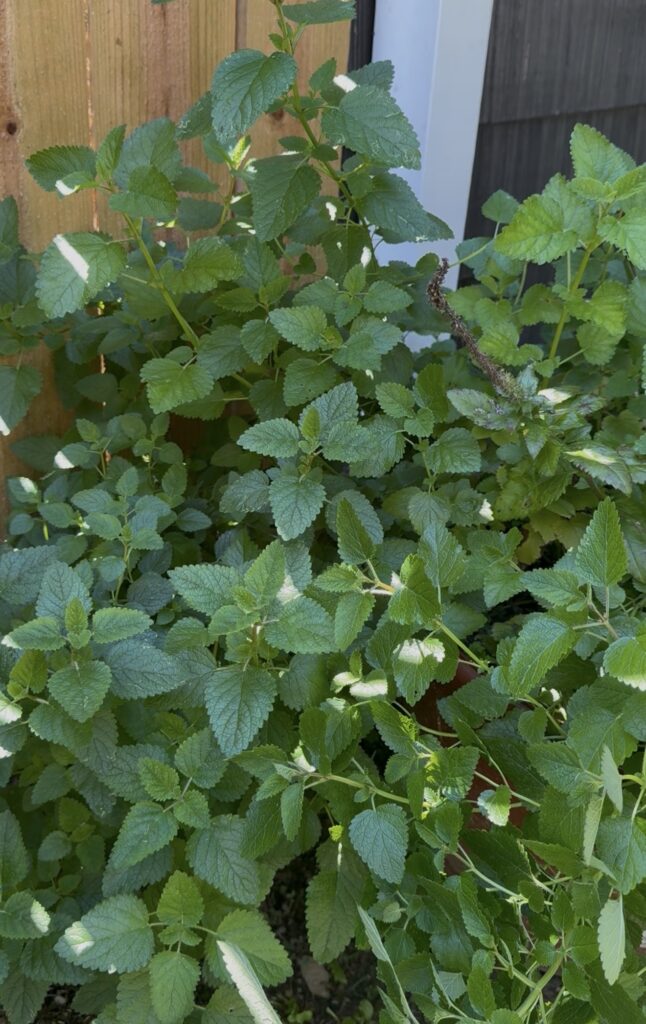
Mint family, lemon scented, and the easiest tea herb there is. Crush a leaf on your way past it and you will plant more.
The part nobody tells youMelissa, the plant’s botanical name, is Greek for honeybee. Beekeepers going back to the Romans rubbed lemon balm inside an empty hive to make a swarm want to move in, and crushed it on their hands before working the bees. Walk past a flowering patch on a warm afternoon and you will hear it before you see it.
Where it wants to liveSun or part shade, about a foot and a half tall, not picky about soil.
Varieties worth growingPlain Melissa officinalis is all most people need. Aurea is variegated and prettier in a pot. Lemonella has a stronger lemon note if you are growing it mainly for tea.
How to cut itShear the whole plant back by a third whenever it gets leggy. It comes back fast and the new growth is the best of it.
How to keep itDry it for tea, which it takes better than most soft herbs, or freeze it in water cubes for iced tea and lemonade.
In the kitchenTea, hot or iced, which is what it is best at. Lemonade. Tossed through a fruit salad. Steeped in honey or made into a simple syrup that keeps a week in the refrigerator.
What goes wrongIt spreads by root and self sows hard. Put it in a container or a bed you are willing to hand over.
Marjoram tender perennial, grown as an annual · woody herb
Oregano’s gentler cousin. Sweeter, softer, and better than oregano in anything with eggs or cream.
The part nobody tells youThe genus name Origanum comes from two Greek words meaning mountain and joy. It was woven into wedding crowns and planted on graves, the same herb for the happiest day and the hardest one. For something most people only meet in a jar of Italian seasoning, it has carried a lot.
Where it wants to liveFull sun, six to nine inches tall, very happy in a pot. It is hardy only to about zone 9, so in most of the country, mine included, it will not survive winter in the ground. Grow it in a container and bring it in.
Varieties worth growingSweet marjoram is the real thing and the one worth growing. What is sold as Italian or hardy marjoram is usually a marjoram and oregano cross, tougher but coarser.
How to cut itHarvest before it flowers, when the flavor is strongest. Cut stems rather than picking leaves.
How to keep itIt dries well, unusual for something this tender, and it also freezes fine on the stem.
In the kitchenIt belongs anywhere oregano would be too loud. Eggs, cream sauces, mushrooms, poultry, sausage. Add it near the end of cooking, because its flavor is delicate and cooks off.
What goes wrongPeople plant it expecting oregano’s toughness. It is not that plant. Treat it like an annual and you will not be disappointed.
Mint hardy perennial · soft herb
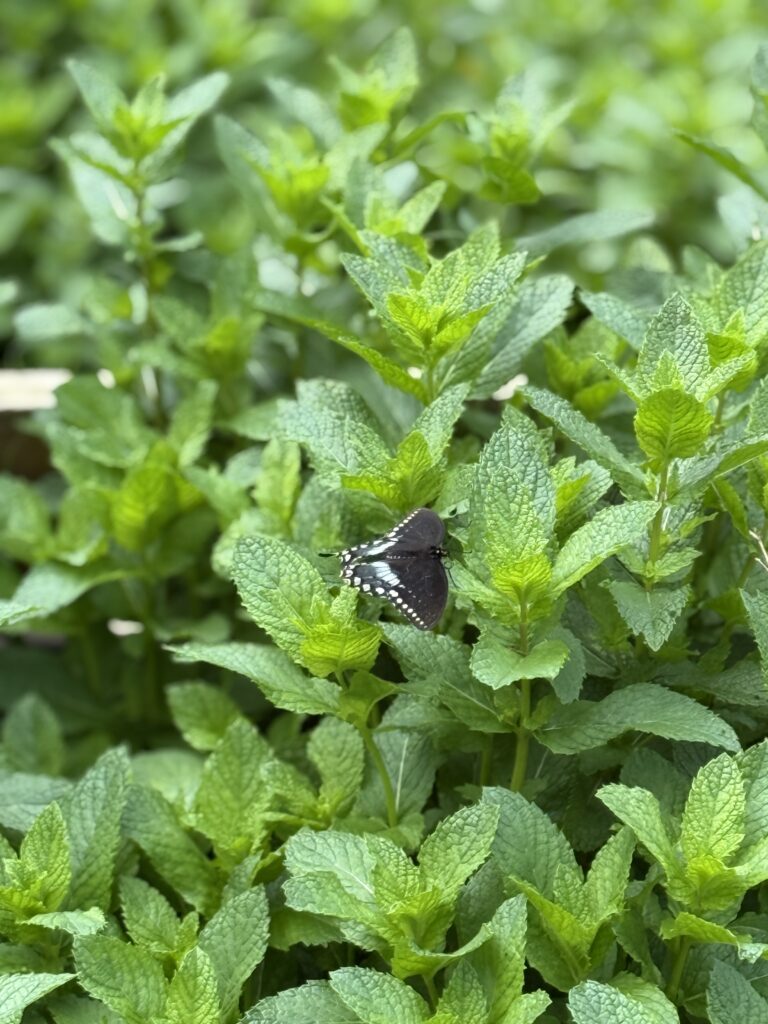
Spearmint for tea and juleps, peppermint for anything sweet, chocolate mint because it is fun. They all behave the same way, which is badly.
The part nobody tells youMint does not actually cool anything. Menthol latches onto a nerve receptor called TRPM8, which is the exact same receptor that fires when you touch something cold. Your mouth is not being chilled, it is being told it has been. It is one of the few times you can catch your own senses lying to you on purpose.
Where it wants to livePart shade suits it better than full sun, and it is not fussy about soil. Plant it in a pot, or in a bed with an edge it cannot cross, or plan on mint forever.
Varieties worth growingSpearmint is the tea and julep mint and the one most people mean. Peppermint is stronger and better with chocolate and anything sweet. Chocolate mint really does smell like it. Apple mint is fuzzy and mild. Whatever you plant, plant one, because they all spread the same way.
How to cut itCut stems often and hard. Frequent harvest keeps it from flowering, and flowering is when the flavor drops off.
How to keep itWater cubes for tea and drinks. It also dries better than most soft herbs if the leaves are for tea rather than cooking.
In the kitchenIced tea, juleps, mojitos. Tabbouleh, where it belongs alongside the parsley. Peas, lamb, and a yogurt sauce with cucumber. Muddle it rather than chopping when it is going into a drink.
What goes wrongIt runs underground. One plant becomes a colony in two seasons. Contain it from the start.
Oregano hardy perennial · woody herb
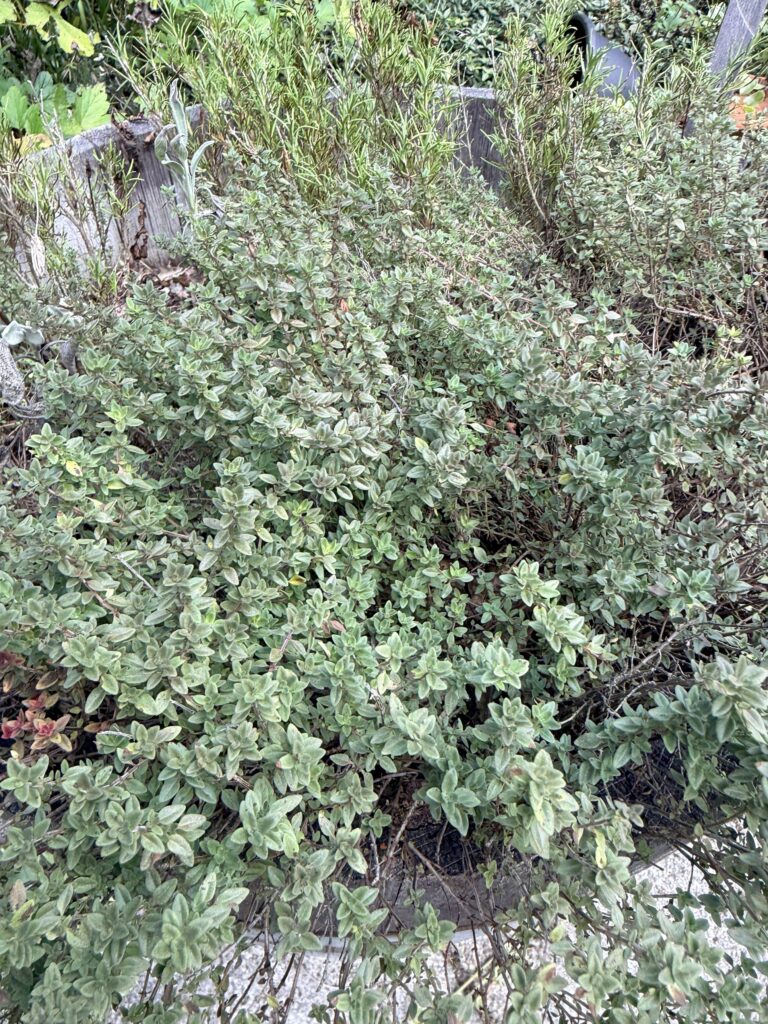
The one herb that is genuinely better dried than fresh. Greek oregano is the one with the punch. Common oregano can be almost flavorless, so buy a plant you have smelled.
The part nobody tells youOregano tastes better when you are mean to it. The compound that gives Greek oregano its bite, carvacrol, builds up when the plant is stressed by sun and drought. Rich soil and regular water give you a big lush plant that tastes like nothing. The sad looking one wedged in gravel at the end of the bed is the one you want.
Where it wants to liveFull sun, dry feet, up to two feet across. It is tough, it is hardy, and it will come back bigger every year.
Varieties worth growingGreek oregano is the one with the punch, and it is worth seeking out by name because plain Origanum vulgare can be almost flavorless. Smell a leaf before you buy the plant. Syrian oregano is what goes in real zaatar. Golden oregano is pretty and weak.
How to cut itCut stems right before the flower buds open, which is when the oil content peaks. You can take a hard cut mid summer and get a second flush.
How to keep itDry it. Hang bundles, strip the leaves when crisp, and store them whole in a jar. Crush between your fingers as you cook.
In the kitchenTomato sauce, pizza, roasted vegetables, Greek dressing, marinades for lamb and chicken. This is the herb you add early rather than late, and dried rather than fresh, which is backwards from everything else in this guide.
What goes wrongRich soil and too much water make a big plant with weak flavor. Keep it lean.
Parsley biennial, grown as an annual · soft herb
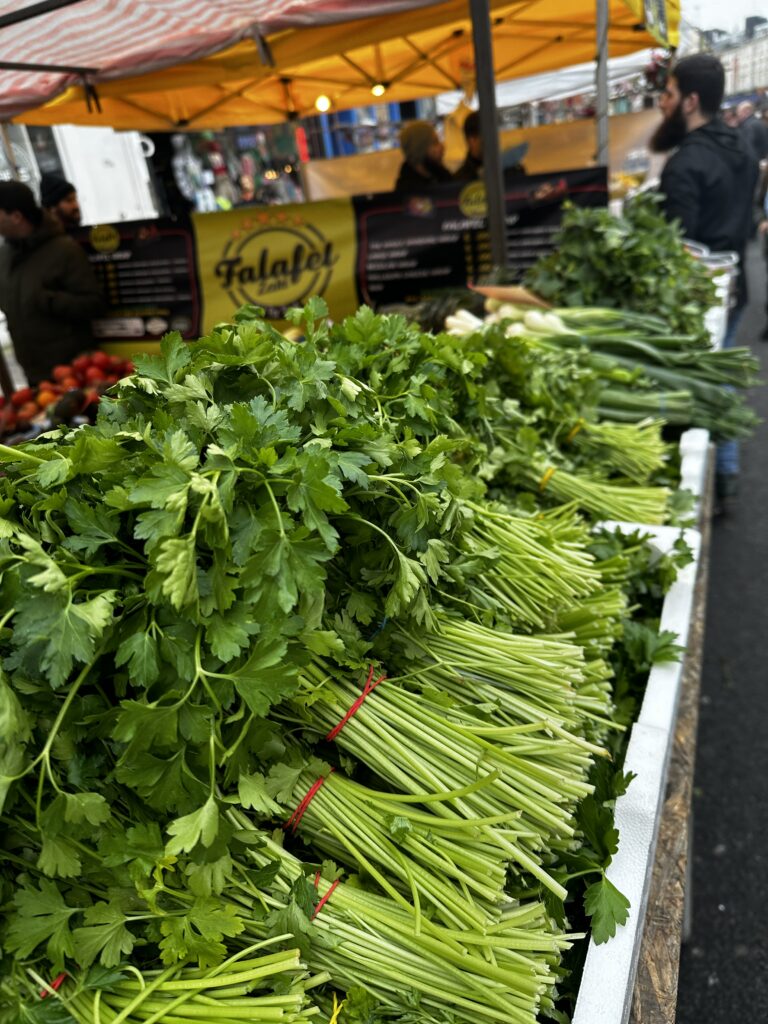
Flat leaf Italian for cooking, curly for the plate. Not a garnish, an ingredient. A whole cup of chopped parsley is what makes tabbouleh taste like anything.
The part nobody tells youChewing parsley after garlic actually works, and it is not just masking. And here is the one that surprises people: parsley is a biennial, so the second spring it shoots up, flowers and dies, doing exactly what it was built to do. The Greeks tied it to death and rebirth for that reason, and then put it on the plate anyway.
Where it wants to liveLight shade, steady moisture, deeper soil than you would think. Seed is famously slow, two to four weeks, so do not give up on it.
Varieties worth growingItalian flat leaf is the cooking parsley and the one to grow. Curly holds up better as a garnish and has more bite raw. Hamburg parsley is grown for its parsnip like root, which is worth knowing about even if you never plant it.
How to cut itTake the outer stems at the base and let the center keep producing. It handles frost and will often hold into winter.
How to keep itChop and freeze, in oil for cooking or water for soups. Drying is a waste of it.
In the kitchenTabbouleh, where it is the main ingredient and not a garnish. Gremolata with lemon zest and garlic over braised meat. Chimichurri. Stems into the stock pot. A handful chopped over almost anything at the end to wake it up.
What goes wrongThe second year it bolts and sets seed, because it is a biennial doing exactly what it is supposed to do. Start new plants every year.
Rosemary evergreen shrub · woody herb
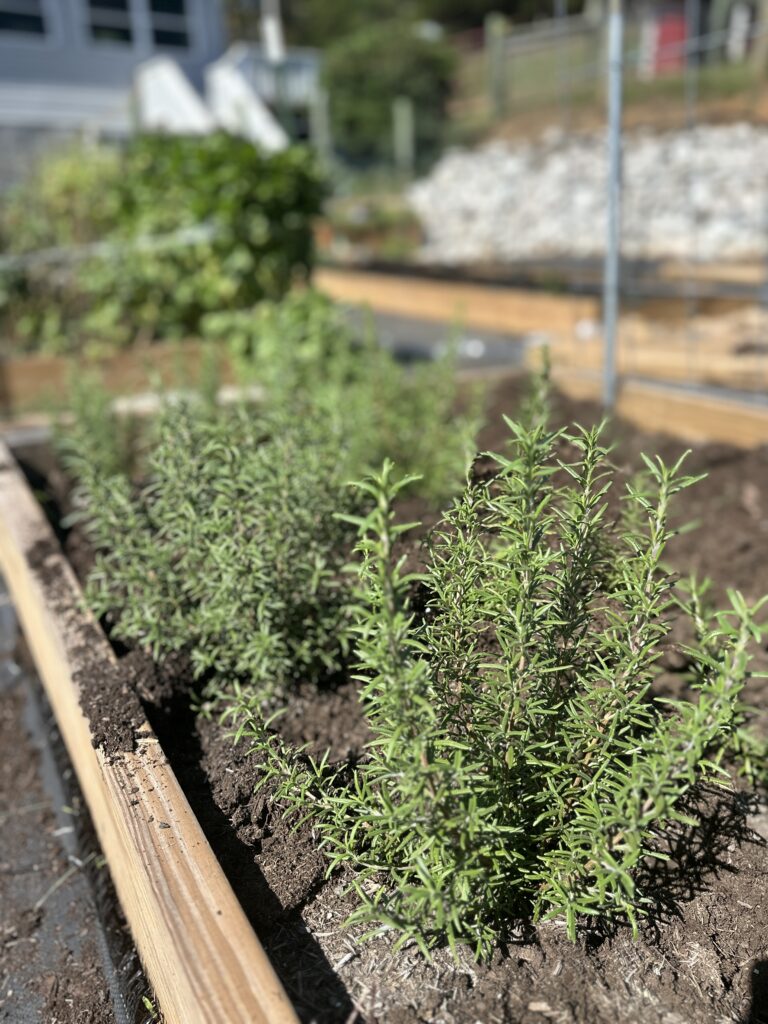
A shrub that happens to be a seasoning. Given a spot it likes, it becomes a permanent part of the garden and you cut from it in February.
The part nobody tells youRosemary is not Rosmarinus anymore. In 2017 botanists looked hard at the DNA and moved it into Salvia, the sage genus, so the correct name is now Salvia rosmarinus. Rosemary is a sage. Every plant tag and cookbook is still catching up, and you can start an argument at a garden club with it.
Where it wants to liveFull sun and drainage above all. It can pass four feet. Winter hardiness is the real question with rosemary. It holds to about zone 7, which is where I am, and a hard winter takes unprotected plants even here, so look for Arp or Hill Hardy, plant it against a south wall, and skip the heavy mulch.
Varieties worth growingIn zone 7 the variety is the whole ballgame. Arp and Hill Hardy are the ones bred to take our winters. Tuscan Blue is a beautiful upright if you are willing to lose it in a bad year. Prostratus trails over a wall or a pot edge.
How to cut itCut soft green tips any time of year. Do not cut back into old bare wood, because it will not push new growth from it.
How to keep itFreeze whole sprigs flat in a bag. It also dries well. Frozen keeps more of the oils, dried is easier to reach for.
In the kitchenPotatoes, roast chicken, lamb, focaccia. Pushed into a loaf of bread before baking. Infused into oil or into a simple syrup for lemonade. And rosemary salt, which uses up an armful at a time.
What goes wrongWet roots in winter, which kills more rosemary than cold does. Raised, gritty, and on the dry side.
Make more of itRosemary roots from cuttings more willingly than almost anything else out there, and one plant will give you a whole row. We walk through it in Turning One Into Many, our guide to an endless rosemary garden.
Sage evergreen perennial · woody herb
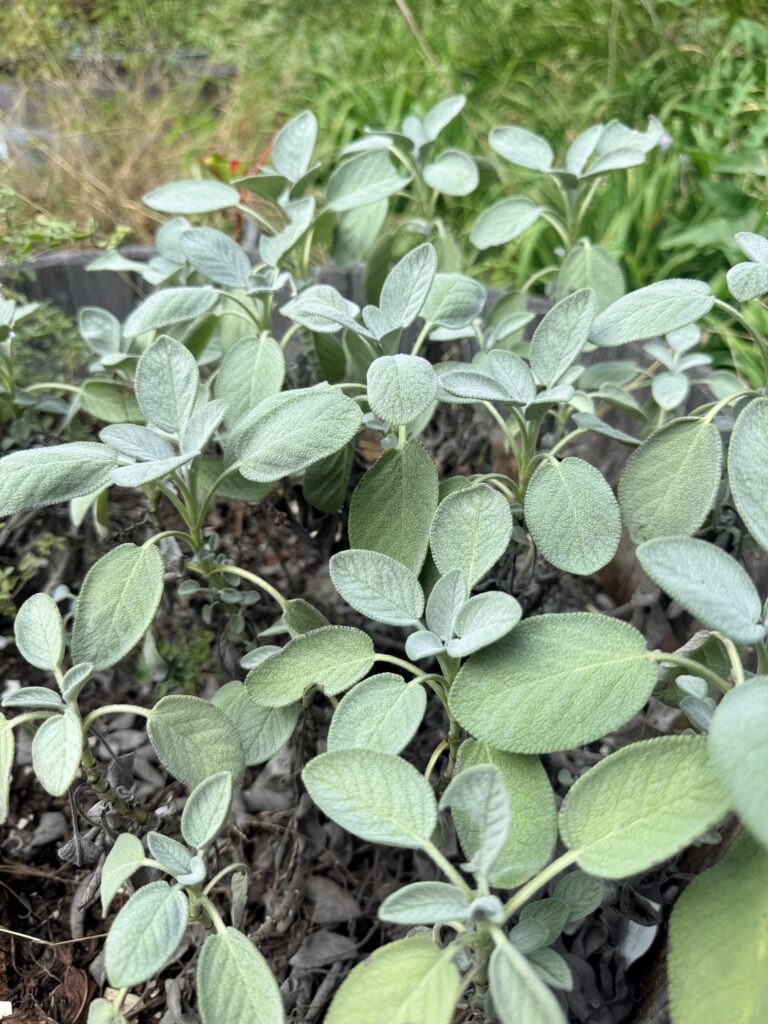
Holds its leaves through our winters, which means fresh sage for Thanksgiving straight off the plant. Purple and tricolor sages are just as edible as plain green.
The part nobody tells youSalvia comes from the Latin salvere, to be saved or to be well, which is a lot of name for a plant that mostly ends up in Thanksgiving dressing. Do this once: drop whole sage leaves into hot butter for about thirty seconds until they stop sizzling, lift them onto a paper towel and salt them. They go glassy and crisp, like a leaf shaped potato chip, and they will not make it to the table.
Where it wants to liveFull sun and drainage, a small shrub about two feet across. It gets woody and sparse after three or four years, so start a replacement from a cutting before you need it.
Varieties worth growingCommon garden sage is the workhorse. Berggarten has broader, rounder leaves and stays tidier. Purple and tricolor sages are just as edible and look better in a bed. Pineapple sage is a different plant for a different job, tea and hummingbirds, not dressing.
How to cut itTake leaves or short stems any time. Give it a shaping cut in spring, into green growth rather than bare wood.
How to keep itFreeze whole leaves or sprigs flat. It is also one of the few herbs that oven dries well.
In the kitchenThanksgiving dressing, and it is worth growing for that alone. Brown butter with squash ravioli. Sausage, pork, white beans. Whole leaves fried crisp in butter for about thirty seconds and salted.
What goes wrongHumidity and crowding bring on mildew. Give it air on all sides.
Tarragon perennial · soft herb
French tarragon is the one you want, the anise note behind bearnaise and a good chicken. It sets no viable seed, so anything sold as tarragon seed is the Russian kind, which tastes like grass.
The part nobody tells youFrench tarragon almost never flowers, and when it does the seed is sterile. So there is no such thing as growing it from seed. Every French tarragon plant alive is a cutting or a division of another one, going back and back. The plant in your garden is, in a real sense, a piece of the same plant everybody else is growing.
Where it wants to liveFull sun and excellent drainage. It struggles with Southern summers, so give it afternoon shade and never let it sit wet. Many people here grow Mexican mint marigold instead, which takes the heat and tastes close enough.
Varieties worth growingFrench tarragon is the only one worth growing and it is sold only as a plant, never as seed, because it does not set viable seed. Anything labeled tarragon seed is Russian tarragon, which is coarse and tastes like grass. Mexican mint marigold is the heat tolerant stand in most Southern gardeners end up with.
How to cut itCut stems in the top third through the season. Cut it back hard in late summer for tender regrowth.
How to keep itFreezing beats drying, which loses it almost entirely. Tarragon vinegar holds the flavor longest of anything.
In the kitchenBearnaise. Chicken, eggs, green beans, fish. A vinaigrette built on tarragon vinegar. Its anise note goes further than you expect, so start with less.
What goes wrongBuying the wrong plant. Always buy French tarragon as a plant, never as seed, and crush a leaf before you pay for it.
Thyme hardy evergreen perennial · woody herb
Tiny leaves, enormous range, and it goes in nearly everything. English thyme for cooking, lemon thyme for fish and shortbread, creeping thyme for between the pavers.
The part nobody tells youThymol, the oil that gives thyme its smell, is one of the active ingredients in Listerine and turns up in a lot of natural cleaners. The Greeks burned thyme as incense and handed it to soldiers as a symbol of courage, which is a big job for a plant with leaves the size of a grain of rice.
Where it wants to liveFull sun and gritty soil. Forms range from flat groundcover to a foot tall. It is hardy and mostly evergreen, so you can cut in January.
Varieties worth growingEnglish or common thyme is the cooking one. French thyme is finer leaved and sweeter. Lemon thyme is worth a separate plant for fish and shortbread. Creeping and woolly thymes are for walking on between pavers, not for the kitchen.
How to cut itCut stems with scissors rather than pulling, which lifts the shallow roots. Shear it lightly after it flowers to keep it from going woody in the middle.
How to keep itFreeze whole sprigs and strip the leaves off frozen with your thumb. It dries well too.
In the kitchenStock, braises, beans, mushrooms, roast chicken. It is the herb that goes in early and cooks all afternoon. Lemon thyme in shortbread, or under the skin of a fish before it goes in the oven.
What goes wrongWet soil and old age. Every few years, replace the woody centers with cuttings, which root easily.
Cut early in the day
Harvest in the morning, after the dew dries and before the sun gets high. That is when the oils in the leaves are strongest, and the oils are the whole point.
Never take more than a third of a plant at once. That is the rule that keeps a plant producing instead of sulking.
Woody or soft decides everything
This is the part that changes how you put herbs up, and almost nobody explains it.
Woody herbs have tough stems and stiff, low moisture leaves. Rosemary, sage, thyme, oregano, marjoram, lavender. These hold up to both freezing and drying.
Soft herbs have tender green stems and high moisture leaves. Basil, parsley, cilantro, dill, chives, tarragon, mint, lemon balm. These go limp and brown when dried and lose most of their character. Freezing is the better answer, and for the most delicate ones, freezing in fat is better still.
Freezing woody herbs
The simplest thing in this whole guide.
- Cut whole sprigs and rinse them.
- Dry them completely. Water left on the leaves turns into freezer burn.
- Lay the sprigs flat in a freezer bag in a single layer, or wrap a few sprigs in freezer wrap first and then bag them.
- Press all the air out, seal, and label with the herb and the date.
Use them straight from frozen. Crumble rosemary over potatoes, drop a whole sage sprig into a pan of browning butter, strip frozen thyme leaves off the stem with your thumb. No thawing, no chopping.
Freezing soft herbs under olive oil
This is what we do with the basil, and it is the method that made me stop drying it altogether.
- Harvest early in the day and rinse the leaves gently.
- Pat them completely dry.
- Chop finely, or pulse in a food processor with a little olive oil. The oil is what protects the color and the flavor.
- Spoon the herbs into an ice cube tray, filling each compartment about halfway.
- Top with olive oil until the herbs are fully covered. Any leaf poking above the oil will darken.
- Freeze solid, then transfer the cubes to a labeled freezer bag or container.
One cube is roughly two tablespoons of chopped herb, already carrying the fat it needs to bloom in a hot pan.
Keep them frozen. Herbs in oil have no acidity protecting them, so an herb and oil mixture is only safe frozen. It never sits on the counter and it never lives in the pantry. Freeze it, use it from frozen, and you are fine.
Freezing in plain water
For chives, mint, lemon balm and parsley headed for soups and teas, water works fine and costs you nothing. Chop, pack into the tray, cover with water, freeze, and bag.
Water cubes are better for anything going into liquid. Oil cubes are better for anything hitting a hot pan.
When drying is the right call
Drying earns its keep on the woody herbs, and on oregano it is not just acceptable, it is better. Bundle the stems tightly, because the stems shrink as they dry and slip right out of a loose tie. Hang them out of direct sun, then strip the leaves into an airtight jar.
Dried herbs hold their flavor about three months in a cupboard and up to a year in the refrigerator or freezer. Store the leaves whole and crush them as you use them.
Skip drying for basil, cilantro, chives, dill and tarragon. You will not like what comes back.
Do the basil first
Basil is tropical, and it does not wait for frost. It starts taking chilling injury once nighttime temperatures drop below about fifty degrees, which in East Tennessee happens weeks before the first freeze. The leaves go dark and translucent and turn black at the edges, and there is no bringing them back.
So when the forecast shows a fifty degree night, that is your signal. Cut the basil, all of it, and deal with it in the kitchen. The rosemary, sage and thyme will still be out there in December.
Want to see the trim? Here is how we cut basil just above a node so it branches out and keeps producing all summer. Never take more than a third of the plant at once, and pinch off flower buds as soon as they show up.
Basil is good for more than dinner, too. Steep the leaves in white vinegar for a few weeks for a quick basil vinegar for dressings, or simmer a handful with lemon slices and cinnamon sticks and the whole house smells wonderful.
A few questions we get asked
How long do frozen herbs last?
About a year at good quality. They are safe indefinitely at zero degrees, but the flavor fades after that first year.
Do I need to blanch herbs before freezing?
No. Culinary herbs go straight into the freezer washed and dried. Blanching is for vegetables.
Which herbs come back every year?
That depends on how cold your winter gets, so here is the whole shelf by cold tolerance rather than by my garden. I am in zone 7B in East Tennessee, but these numbers travel.
| Herb | Hardy to about | What that means |
|---|---|---|
| Chives | Zone 3 | Comes back almost anywhere |
| Mint | Zone 3 | Comes back everywhere, keep it in a pot |
| Oregano | Zone 4 | Reliable perennial in most of the country |
| Sage | Zone 4 | Comes back, but bare in spring, so preserve in fall |
| Thyme | Zone 4 | Reliable, wants sharp drainage |
| Tarragon (French) | Zone 4 | Comes back, dies down completely |
| Lemon balm | Zone 4 | Comes back, and spreads |
| Lavender (English) | Zone 5 | Needs drainage more than it needs warmth |
| Parsley | Zone 5 | Biennial, better replanted each year |
| Rosemary | Zone 7 | The fussy one. Zone 6 with Arp or Hill Hardy and a sheltered spot. Colder, grow it in a pot and bring it in |
| Marjoram | Zone 9 | Treated as an annual nearly everywhere |
| Basil | Annual | Done at the first frost, no exceptions |
| Cilantro | Annual | Cool season, bolts in heat, often reseeds |
| Dill | Annual | Reseeds itself readily |
If you do not know your zone, the USDA map at planthardiness.ars.usda.gov gives it to you from your zip code. Outside the United States the numbers will not match your system, but your average winter low will tell you the same thing.
One rule holds everywhere: a perennial herb that dies back to the ground comes up in spring with nothing on it. If you want it in your kitchen this winter, cut and preserve it now, while the plant is still full.
Why did my frozen herbs turn brown?
Almost always water left on the leaves, air left in the bag, or leaves sitting above the oil line. Dry them thoroughly, press the air out, and keep everything submerged.
Is it safe to store herbs in olive oil?
Only frozen. Oil is not acidic and offers no protection against botulism, so herb and oil mixtures do not belong at room temperature or in the refrigerator for long. Freeze them and use them from frozen.
Can I use frozen herbs as a garnish?
No. They go limp as they thaw. Frozen herbs are for cooking, not for the top of the plate.
How much can I cut at once without hurting the plant?
Up to a third of the plant. Take from the top, cut above a leaf node, and water afterward.
My herb is flowering. Is it ruined?
Not ruined, but flavor drops once a plant flowers, because the plant is putting its energy into seed. Pinch buds off as they appear on basil, mint and marjoram. On oregano, cut the whole plant back just before the buds open, which is when its oils peak.
Can I mix herbs in one cube?
Yes, and it is a good idea if you cook the same dishes often. A rosemary, sage and thyme cube is a whole pan of roasted vegetables waiting to happen.
What about the woody stems, can I use those?
Do not throw out rosemary and thyme stems. Freeze them in a separate bag and drop them into stock, or use stripped rosemary stems as skewers on the grill.
Which herbs can I grow in a pot on the porch?
Basil, chives, parsley, thyme, marjoram and mint all do well in containers, and mint should be in one. Rosemary and sage will live in a pot for a few years but want to be in the ground eventually. Dill and cilantro resent transplanting, so sow them directly into the pot they will finish in.
Looking for something to do with the dried ones? Our homemade rosemary infused herb seasoning salt uses up a lot of rosemary and makes a good gift.
Putting up more from the garden? Our Canning and Preserving guide gathers all of our jams, pickles, salsas, ferments and herb recipes in one place.


Written by
Lane and Jules Morris
Authors and University of Tennessee faculty writing from our farm in East Tennessee about gardening, the farm kitchen, faith and designing a flourishing life at any age. More about us
