
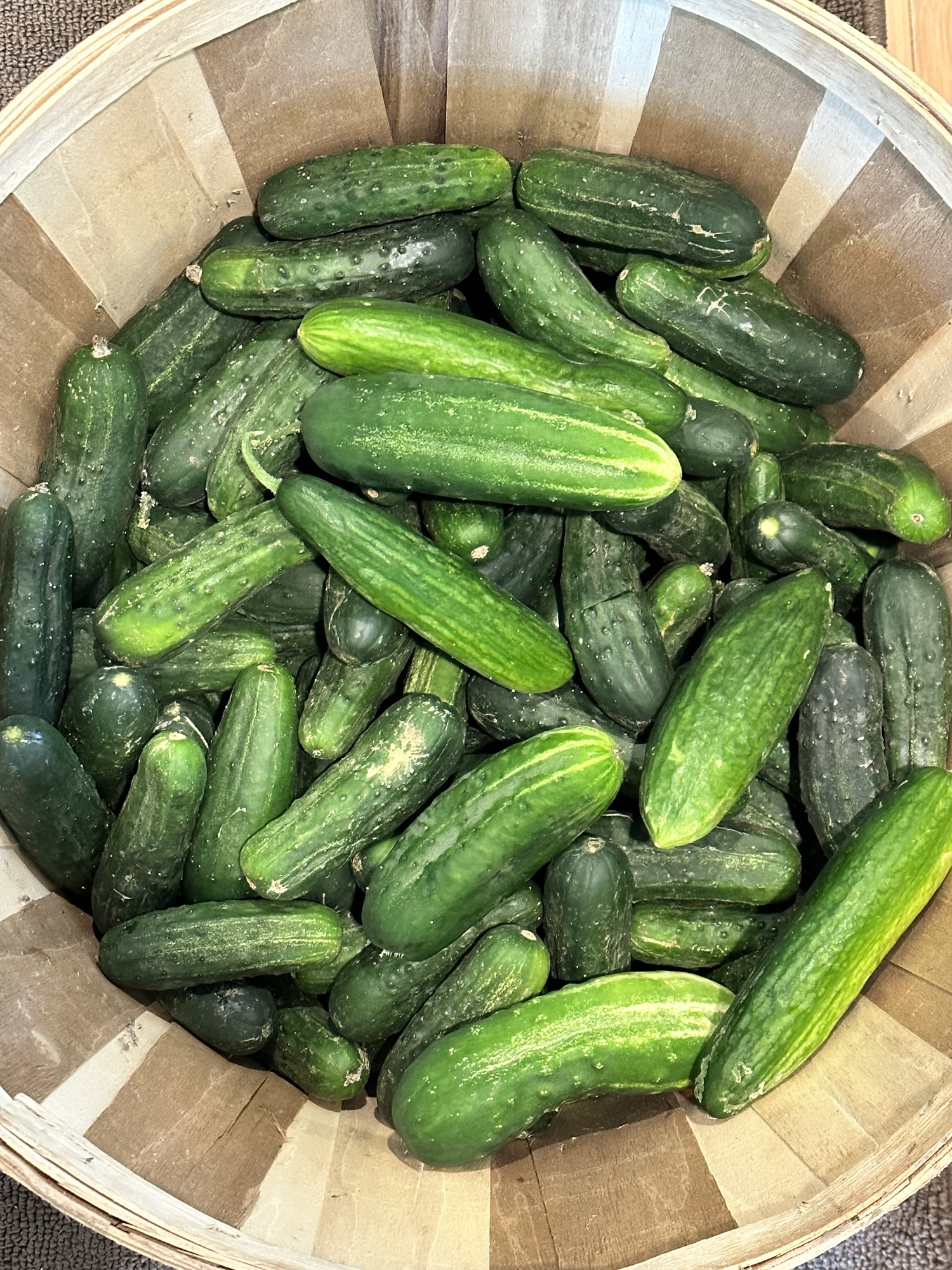
Some garden lessons you only have to learn once. This was one of mine.
Last summer I planted cucumbers and walked away feeling pretty good about myself. By July I had vines going every direction, cucumbers coming in faster than we could pick them, and more overgrown yellow ones than I care to admit. You know what happens to overgrown cucumbers on a farm with pigs? The pigs eat well. Real well.
This year I did things differently — and if you’re planning to grow cucumbers, I want to save you from learning this the hard way.
The Thing Nobody Tells You About Cucumbers
Just like tomatoes have determinate and indeterminate varieties — ones that stay manageable and ones that just keep going and going — cucumbers work the same way. There are compact bush types and there are vining types, and they are a very different gardening experience.
Most garden centers don’t make a big deal of this distinction. But it matters, especially if you’re growing in raised beds or limited space. Read the tag before you buy. If it says “vigorous vines” — just know what you’re signing up for.
Vining Cucumbers: High Yield, High Chaos
Vining cucumbers are the most common type you’ll find. They grow long, sprawling vines — often 6 to 8 feet — and they need a trellis or substantial support. They tend to be high producers over a long season, which sounds great until the cucumbers are coming in faster than your family can eat them.
The upside: they’re generally more disease-resistant and produce more total fruit than bush varieties. If you’re canning or pickling in large quantities, vining types give you the volume you need.
The downside: they need space, they need consistent harvesting, and if life gets busy for a week, you will come back to a jungle.
Popular Vining Varieties
- Straight Eight — A classic heirloom variety, very popular in home gardens. Produces 8-inch fruits with sweet, fine-grained flesh. Long trailing vines that do best with trellis support. Ready in about 65 days.
- Sweet Success — A burpless hybrid with thin, sweet skin. Fruit grows 12–14 inches long and must be staked or trellised. Ready in about 55 days.
- Persian Cucumber — Thin-skinned, nearly seedless, and wonderfully crisp. Mild, slightly sweet flavor with no bitterness. Great for fresh eating, but they grow on vines and are very prolific.
- Burpless #26 — Another vigorous vine producing 12-inch fruit with great flavor. Best picked between 8 and 10 inches for optimal taste. Ready in about 50 days.
- Armenian Cucumber — Technically a melon but tastes just like a cucumber. Very soft skin, no peeling needed. Grows long and curved on rampant vines. A specialty variety worth trying if you have the space.
Bush & Compact Cucumbers: My Kind of Cucumber
This is where I live now. Bush cucumbers are essentially compact, more manageable versions of their vining cousins. They typically grow 2 to 3 feet tall and wide, and while some do send out short vines, they don’t take over your entire raised bed.
Here’s what surprised me: you’re not sacrificing much yield. Bush cucumbers can produce 10 to 20 fruits in just 2 to 3 weeks, and being more determinate in nature, they can do this multiple times over the course of a season. That’s a lot of cucumbers from a tidy plant.
This year I’m growing a small snacking variety — thin skin, really crisp, not prickly — and I have three plants in a raised bed outside my greenhouse. They still need a little trellis support, but they stay manageable. I can actually keep up with them. That’s the whole goal.
Popular Bush & Compact Varieties
- Spacemaster 80 — One of the most popular compact varieties, and for good reason. Vines stay around 2 to 3 feet. Produces 7 to 8-inch fruits. Great for containers, raised beds, or small garden spaces. Ready in about 60 days.
- Bush Champion — A high-yield compact variety that stays close to the ground, usually spreading no more than about 24 inches wide. Disease-resistant and very productive. Produces impressively large fruits on a small plant.
- Salad Bush — Bred specifically for container growing. Produces dark green, 8-inch fruits ready in about 55 days. A reliable, compact performer.
- Patio Snacker — Fast-growing and ready in just 50 days. Bred for small spaces with the crisp bite of a full-sized slicing cucumber. A great snacking variety.
- Pickle Bush — For those who want to pickle but don’t want the chaos of vining varieties. Compact plant, ready in 50 to 55 days, produces classic pickling-sized cucumbers. You can grow two plants in a half-barrel planter.
A Note on Prickles
I love a good pickle. I just prefer to buy someone else’s pickling cucumbers. Pickling varieties tend to be pricklier, and the prickles are real. If you have sensitive hands or just don’t love that texture, snacking and slicing varieties — especially the compact ones — tend to be much smoother and easier to handle. Thin skin, less prickle, easier harvest. For me, that’s a win.
How to Grow Cucumbers: The Basics
Sun & Soil
Cucumbers love full sun — at least 6 to 8 hours a day. They want warm soil (at least 60°F to germinate and really 70°F to thrive), so don’t rush them in spring. Plant in well-draining soil rich in organic matter. Raised beds are ideal because the soil warms faster and drainage is easy to control.
Watering
This is the most important care factor. Cucumbers need consistent moisture — at least 1 inch of water per week, more in hot weather. Inconsistent watering leads to oddly shaped, bitter-tasting fruit. If you can, use a soaker hose or drip irrigation to keep leaves dry and reduce disease risk. Wet leaves are an invitation for powdery mildew.
Support
Even bush varieties benefit from some support — a small trellis, tomato cage, or simple stake keeps fruit off the ground, improves airflow, and makes harvesting easier. Vining types absolutely need a sturdy trellis. Plan for it before you plant.
Spacing
Bush cucumbers do well at about 18 to 24 inches apart in raised beds. Vining varieties need 36 to 48 inches if left to sprawl, or can be spaced 12 to 18 inches apart if trained vertically on a trellis.
Harvesting
This is where people get in trouble. Harvest cucumbers when they’re still firm and bright green. The moment the skin starts to yellow, the cucumber is past its prime — the flesh gets bitter and the seeds get large. Frequent harvesting also signals the plant to keep producing, so pick early and pick often. Don’t let them sit.
(This is exactly how the pigs got involved last year. Consider yourself warned.)
The Takeaway
Grow what you’ll actually keep up with. That’s really it. If you have a big garden, lots of time, and big plans for pickling — a vining variety might be perfect for you. But if you’re growing in raised beds, want something manageable, and just want a steady supply of crisp cucumbers to snack on all summer, go compact. Read the tag. Plant with intention.
That’s what flourishing in the garden actually looks like — not the most impressive plants, but the ones that fit your real life.
Now that’s BombDiggity.
Have a cucumber question or a variety you love? Drop it in the comments — I’d love to hear what’s growing in your garden this year.
When to pick cucumbers
Cucumbers go from perfect to overgrown in about two days, so this is a crop you check daily once it starts producing. Picking often is also what keeps the plant making more.
- Slicing cucumbers: 6 to 8 inches long.
- Pickling cucumbers: 2 to 4 inches, while they are still dense and crunchy.
- Color: bright and evenly green. Yellowing means overripe, and the seeds inside will be tough.
- Feel: firm the whole length. Soft or spongy ends mean you waited too long.
A cucumber past its prime has yellow patches, shriveled ends or blemished skin. Cut a slice if you are unsure. It should be crisp and taste clean. Leaving overgrown fruit on the vine tells the plant its work is done and it will slow down, so pick the duds off and compost them.
Cucumber questions we get asked
When are cucumbers ready to pick?
Slicing types at 6 to 8 inches, pickling types at 2 to 4. Go by firmness and even green color rather than by the calendar, and check the plants every day once they start.
Why are my cucumbers bitter?
Stress, usually heat or inconsistent watering. The bitterness concentrates near the stem end and in the skin, so peeling and trimming that end often rescues one. Steady moisture and mulch prevent it.
Why are my cucumbers yellow?
They are overripe. A yellow cucumber has gone to seed. Pick earlier, and pull the yellow ones off so the plant keeps producing.
Should cucumbers be trellised?
Vining types, yes. A trellis keeps fruit off the ground, makes them straighter and easier to find, and improves airflow, which helps with disease. Bush types do not need it.
Do cucumbers need a lot of water?
Yes, and consistently. They are mostly water and they show every dry spell as bitterness or misshapen fruit. Deep watering at the base beats frequent light sprinkling.
Why do my cucumber plants flower but not fruit?
Usually the first flush of male flowers, which always come first and do not set fruit. If it continues, it is a pollination problem, and planting flowers nearby to bring in bees fixes it more often than anything else.
Want to keep reading? Try Determinate vs. Indeterminate Tomatoes: Everything You Need to Know to Grow a Better Harvest, or Determinate vs. Indeterminate Potatoes: Everything You Need to Know to Grow, Hill, and Harvest Like You Mean It.
Planning your vegetable garden? Our Growing Vegetables guide brings all of our crop, heirloom, soil and seed starting posts together, and Garden by the Season shows what to do and when.


Written by
Lane and Jules Morris
Authors and University of Tennessee faculty writing from our farm in East Tennessee about gardening, the farm kitchen, faith and designing a flourishing life at any age. More about us
