
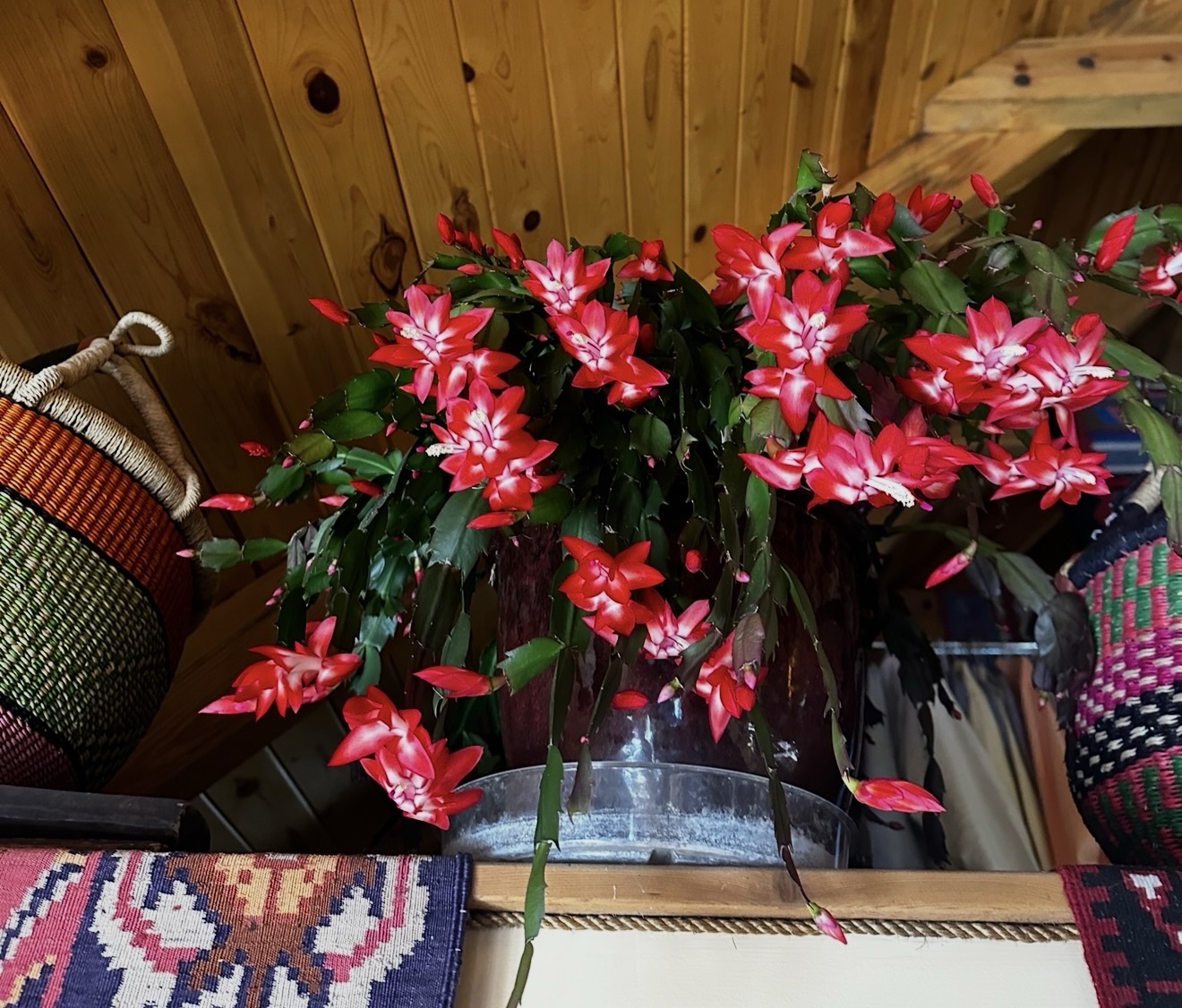
Most holiday cacti sold as Christmas cactus are actually Thanksgiving cactus, and nearly all of them will rebloom every year if you give them six weeks of long, uninterrupted nights starting around the middle of September. That is the whole trick. Everything else is ordinary houseplant care.
Ours have always added something to the holidays, but one year I got a surprise. After a few days away I came home to a cactus covered in vibrant orange blooms in October. A Halloween cactus, apparently. I had not done a thing to it on purpose. A few cool nights and less light while we were gone did the whole job, which is exactly how these plants work once you understand what they are listening for.
Which one do you actually have?
Three plants get sold under holiday names and they are not the same. Look at the edges of the flat stem segments.
- Thanksgiving cactus (Schlumbergera truncata). Segments have two to four pointed, saw-toothed teeth along each edge, like little claws. Yellow pollen. Blooms about a month before the Christmas type. This is what most stores sell.
- Christmas cactus (Schlumbergera x buckleyi). Segment edges are rounded and scalloped rather than toothed. Purplish-brown pollen. Blooms later, closer to Christmas.
- Easter cactus (Rhipsalidopsis). Rounded segments with small bristles at the tips. Blooms in spring and sporadically the rest of the year.
It matters because if you bought a Thanksgiving cactus and expected flowers on December 25th, the plant is not failing. It is doing exactly what it is supposed to do, a month earlier.
How to make a holiday cactus bloom
These are short-day plants. They set flower buds in response to long nights and cool temperatures, the same way mums do. Get those two things right and the plant does the rest.
- Start around the middle of September. Count back six weeks or so from when you want flowers.
- Give it 14 or more hours of continuous darkness every night, for at least six weeks running. A spare room, a closet, or a corner far from any lamp all work.
- Keep it in bright light during the day. Dark nights, bright days.
- Hold the temperature between 60 and 68 degrees. Close to 68 is ideal. Cool nights help.
- Do not interrupt the dark. As little as two hours of light at night will stop bud set. A lamp switched on in that room undoes the week.
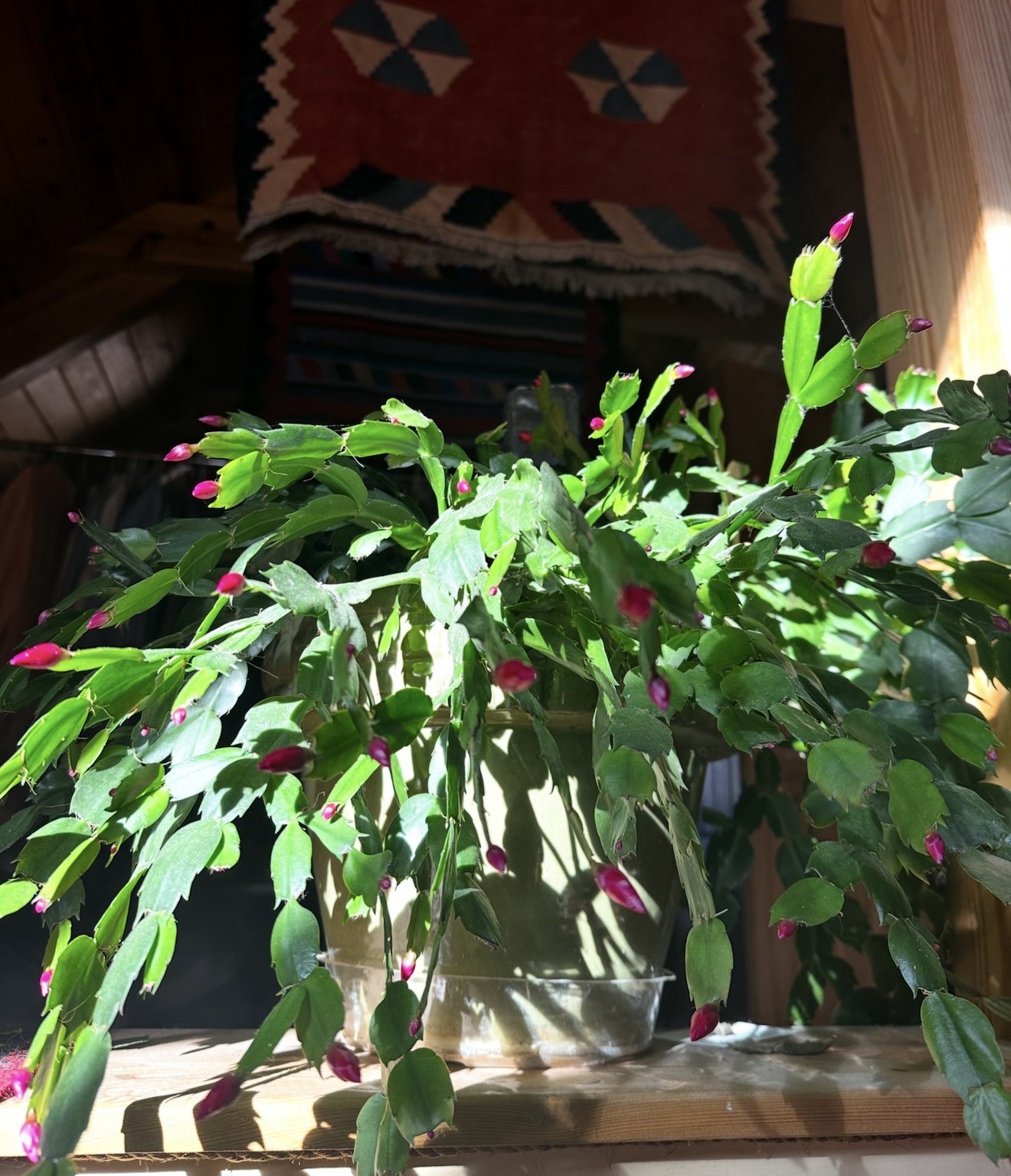
Buds show up three to four weeks in. Once you see them, you can move the plant back into the living room and enjoy it. Keep the soil evenly moist from that point, because letting it dry out with buds on it is the fastest way to lose them.
The easy version, and the one that gave us an orange cactus in October: put it somewhere dark and cool and simply leave it alone.
Everyday care
- Light. Bright, indirect. These grow on trees in Brazilian rainforests, not in deserts. Direct summer sun will scorch the segments.
- Water. Let the top inch dry, then water thoroughly and let it drain. They are succulents, not cacti in the desert sense, so they want more water than a prickly pear and less than a fern.
- Humidity. They appreciate it. A tray of pebbles and water underneath helps in a dry house.
- Repotting. Resist. They flower best when somewhat potbound, and once every three years is plenty.
Feeding, and when to stop
August is the last month to feed a holiday cactus before it settles into its fall rest. Feed monthly through the growing season at half strength, then stop. Pushing new growth right as the plant should be preparing to bloom works against you.
We use natural options rather than harsh synthetics:
Fish emulsion
Mix according to the bottle, usually about a tablespoon per gallon of water, and water it in as normal. It feeds slowly and will not force weak growth right before dormancy. Shop fish emulsion
Compost tea
Steep a scoop of finished compost in a gallon of water for 24 to 48 hours, strain, and water the plant with it. Gentle, and full of the microbes the roots want.
Seaweed or kelp extract
Diluted kelp feeds without overloading the plant with nitrogen, which is exactly what you want heading into rest. Shop kelp extract
Whichever you choose, water once that month, and make sure the soil is already slightly damp first so you are not feeding a bone dry root system. One feeding, then rest. That is it.
Holiday cactus questions we get asked
Is my plant a Christmas cactus or a Thanksgiving cactus?
Look at the stem segment edges. Pointed, claw-like teeth mean Thanksgiving cactus, which is what most stores sell. Rounded, scalloped edges mean a true Christmas cactus. Thanksgiving types bloom about a month earlier.
How do I get my Christmas cactus to bloom?
Give it at least 14 hours of unbroken darkness every night for six weeks, starting around mid September, with bright light during the day and temperatures between 60 and 68 degrees. Buds appear in three to four weeks.
Why is my holiday cactus dropping its buds?
Something changed. Sudden shifts in temperature or light, a move to a new spot, or the soil drying out with buds on the plant will all cause bud drop. Once buds set, keep the soil evenly moist and leave the plant where it is.
Why is my Christmas cactus not blooming?
Almost always light at night. Two hours of lamplight during the dark period is enough to stop bud set entirely, so a plant in a room where someone flips a switch in the evening will never get the signal.
How often should I water a holiday cactus?
When the top inch of soil is dry. These come from Brazilian rainforests where they grow on trees, so they want more water than a desert cactus. Water thoroughly, let it drain, and never leave it sitting in a saucer.
Should I repot my Christmas cactus?
Rarely. They bloom best slightly potbound, so once every three years is plenty. Repotting a plant that is about to bloom is a good way to get no flowers.
When should I stop fertilizing?
Late summer. August is the last feeding before the plant rests. Feeding into fall pushes leafy growth at exactly the moment you want flower buds.
Can a holiday cactus bloom more than once a year?
Yes. Many rebloom in spring, and if conditions happen to line up they will bloom off schedule entirely. Ours once came into full orange bloom in October while we were away from home.
How long do holiday cacti live?
Decades. They are commonly handed down, and a well-kept plant will outlast most of the furniture in the room.
Have you ever had a plant surprise you with an accidental bloom? Tell us in the comments.
Growing more flowers? Our Growing Flowers guide brings all of our flower guides together in one place, from dahlias and zinnias to cool weather blooms and arranging.
If you enjoyed this one, you might also like The Complete Mum Guide: Which Mums Come Back Every Year and The Complete Hydrangea Guide.


Written by
Lane and Jules Morris
Authors and University of Tennessee faculty writing from our farm in East Tennessee about gardening, the farm kitchen, faith and designing a flourishing life at any age. More about us
