
The short version: compost is what happens when you pile up dead plant material and let it rot on purpose. Mix roughly one part wet green things like kitchen scraps and grass with three parts dry brown things like leaves and straw, keep it about as damp as a wrung-out sponge, and turn it when you think of it. In a few months you have dark crumbly material that does more for a garden bed than anything you can buy. You do not need a bin, a tumbler or a thermometer to start.
If I had to name one secret to a thriving garden, it would be compost. Composting is the simplest kind of magic, turning what was once waste into something that nourishes everything that follows. Whether you have a big pile behind the barn or a small bin by your back door, composting is one of the most satisfying habits you can build.
I actually have both! A 3-part bin system that we built a few years ago, and a Mill Food Recycler that has quickly become a favorite addition to our home.
Why compost?
Composting is nature’s way of recycling, and it’s one of the most powerful tools we have for creating healthy, productive gardens. You’re harnessing decomposition to turn ordinary kitchen scraps and yard waste into a nutrient-dense soil amendment that plants love. It improves soil structure, increases water retention, and provides the nutrients that help vegetables, flowers, and herbs reach their potential.
There’s an impact beyond the garden, too. In the United States, food scraps and yard waste make up roughly a quarter of what ends up in landfills, and only a small fraction of it gets composted. When organic matter breaks down in a landfill without oxygen, it produces methane, a greenhouse gas far more potent than carbon dioxide. Composting at home keeps that material out of the landfill entirely.
Three easy steps to start
You don’t need fancy equipment or a science degree. The best compost system is the one you’ll actually use, so start simple and learn as you go.
- Choose your location. Pick a spot that’s convenient to get to but not too close to the house, with good drainage, some shade to prevent excessive drying, and easy access to water. You can buy a tumbler, build a simple three-bin system, or just start a pile on the ground.
- Gather your materials. Start collecting greens (nitrogen-rich things like food scraps, fresh grass clippings, and coffee grounds) and browns (carbon-rich things like dry leaves, shredded paper, and cardboard). Keep a small container in the kitchen for scraps, and stockpile browns somewhere dry so you always have them ready.
- Layer and maintain. Begin with a layer of browns for drainage, then alternate greens and browns. Moisten each layer as you build, aiming for that wrung-out sponge consistency. Turn every week or two to work in oxygen, and keep adding as you go. In 3 to 6 months you’ll have finished compost.
The habits that keep a pile healthy
- Collect kitchen scraps. Fruit and vegetable peels, coffee grounds, tea bags, and eggshells in a countertop container. Empty it into the bin every few days to keep the kitchen fresh and the pile fed.
- Add brown materials. Balance your greens with dry leaves, shredded paper, cardboard, and straw. Aim for roughly 3 parts brown to 1 part green by volume.
- Turn regularly. Mix the pile every one to two weeks with a pitchfork or compost aerator. That oxygen is what beneficial microbes need, and it prevents the anaerobic conditions that cause bad smells.
- Monitor moisture. Keep it as moist as a wrung-out sponge, damp but not dripping. Too dry and decomposition slows. Too wet and you get anaerobic conditions. Water lightly during dry spells, add browns if it’s soggy.
Consistency matters more than perfection. Nature does most of the work; you just create the right conditions and keep them going.
What goes in
Greens, for nitrogen
- Vegetable and fruit scraps: peels, cores, rinds
- Coffee grounds and paper filters
- Tea bags and loose tea leaves
- Fresh grass clippings, in thin layers
- Fresh plant trimmings and weeds that haven’t gone to seed
- Crushed eggshells for a calcium boost
Greens are moist and decompose quickly, heating up your pile and providing the nitrogen microbes need. They’re the activators that get decomposition moving.
Browns, for carbon and structure
- Dry leaves and small twigs
- Shredded newspaper and office paper
- Cardboard, torn into small pieces
- Straw and hay
- Wood chips and sawdust, untreated only
- Paper egg cartons and paper towel tubes
Browns are dry and decompose slowly, creating the air pockets that keep everything balanced and prevent odors.
One of our secrets: coffee grounds are a nitrogen goldmine. They add nutrients and help beneficial soil microbes thrive. We collect grounds from local coffee shops to supercharge our piles.
What to compost in fall
Fall is the easiest time of year to build a pile, because the single hardest ingredient to find in summer falls out of the sky in October.
Leaves are the best brown material there is, and they are free. A pile of whole leaves takes a year or more to break down, but shredded leaves compost fast. Run the mower over them before you rake, or rake them into a row and mow the row. Shredded leaves also make the best mulch on the property, so gather more than you think you need.
Stockpile browns now for next summer. This is the part most people miss. Come June you will have buckets of kitchen scraps and grass clippings and nothing dry to balance them with, and that is when a pile turns into a slimy, sour mess. Bag or bin a pile of shredded leaves in the fall and you will have the fix on hand all year.
Everything the garden is done with goes in, with one caution. Spent bean and squash vines, tomato plants, the greens that bolted, the flowers that finished. Leave out anything visibly diseased and anything that has gone to seed, unless your pile reliably runs hot enough to kill seed, and most home piles do not.
A cleared bed and a fall pile work together. Whatever you rake off a bed goes to the pile, and the bed itself gets sown with a cover crop so it is not sitting bare all winter.
What to keep out
Knowing what not to compost matters as much as knowing what to include. We learned some of these the hard way, dealing with pests, smells, and batches we couldn’t use.
- Meat, bones, dairy, and oils. All animal products attract rodents and other pests, create terrible odors as they rot, and take far longer to break down than plant material.
- Diseased plants. Anything showing disease, fungal infection, or heavy pest damage, plus weeds that have gone to seed. Home piles rarely get hot enough to kill pathogens, so you risk spreading the problem through your whole garden.
- Pet waste. Dog and cat waste can carry parasites and bacteria that survive composting, which is a real risk around food crops. Manure from herbivores like chickens, horses, and rabbits is fine. Carnivore waste is not.
- Treated wood. Chemically treated wood contains preservatives that leach into your compost and then your soil.
- Large woody branches. Small twigs are fine, but thick woody stems take years in a home pile. Run them through a chipper first if you want to compost them.
If you’re unsure about something, ask yourself whether it’s natural, untreated plant material or food. If the answer is no, skip it. When in doubt, leave it out.
Composting with a flock
If you keep chickens, ducks or geese, you already have the best compost input on the place and it arrives daily whether you want it or not.
Coop bedding is close to a perfect compost mix on its own. Shavings or straw are the browns, the manure is the greens, and the birds have already shredded and mixed it for you. When I clean out a coop it goes straight to the pile and that pile heats up within a day or two.
Chicken manure is hot and must age. Fresh, it carries enough nitrogen to burn roots and scorch anything growing. It is not a fertilizer you can use straight out of the coop. Six months in a pile, or a full winter sitting on a bed you are not planting until spring, and it becomes some of the richest material you will ever put on a garden.
Let the birds turn the pile for you. This is the trick worth knowing. Chickens will work a compost pile apart looking for bugs and scraps, and in doing it they turn and aerate it better than you will with a fork. If your pile is somewhere they can reach, you have free labor. More on running birds and beds together is in my post on chickens, ducks and geese in the garden.
One caution: bird manure is fine, but dog and cat waste is not, for reasons covered further down.

Troubleshooting
Almost any compost problem can be fixed with a few adjustments. The trick is learning to read what the pile is telling you.
- Stinky, smelly pile. Usually too many greens, not enough air, or too much moisture. Add generous amounts of browns, then turn the pile thoroughly to work oxygen through it.
- Dry, dusty pile. Not enough moisture for microbial activity. Water gradually while turning, aiming for that wrung-out sponge consistency.
- Slow decomposition. Pieces too large, not enough turning, the wrong green-to-brown ratio, or not enough moisture. Chop materials into 2 to 4 inch pieces, turn weekly, and adjust the ratio.
- Pest invasion. Food scraps exposed on the surface, meat or dairy in the pile, or a bin that isn’t secure. Always bury food scraps under 6 to 8 inches of browns, remove any meat or dairy right away, and use a bin with a lid.
Harvesting and using your compost
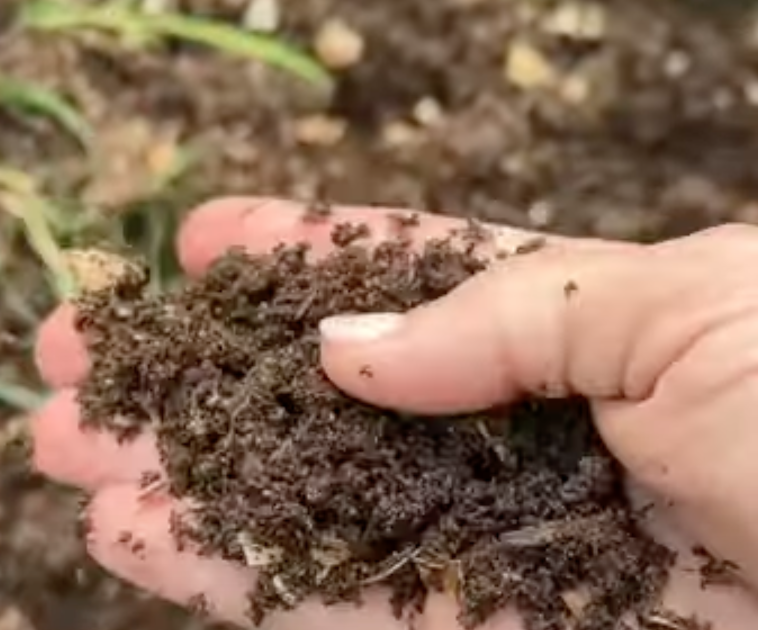
After 3 to 6 months, or longer in colder climates, you’ll have finished compost. You’ll know it’s ready when it’s dark brown to black, crumbly like rich soil, and smells earthy and pleasant, like a forest floor after rain. You shouldn’t be able to pick out individual pieces of food or plant material anymore, except for tough things like avocado pits or woody stems, which you can just toss back into the active pile.
- Garden bed amendment. Mix 2 to 4 inches into vegetable and flower beds before planting.
- Potting mix booster. Blend with regular potting soil at about 25 to 30 percent compost for container plants.
- Top dressing. Spread a 1 inch layer around established plants as a slow-release fertilizer.
- Mulch alternative. Use 2 to 3 inches around trees and shrubs to suppress weeds and hold moisture.
- Lawn top dressing. Sift fine compost over the lawn in spring to improve soil health.
- Compost tea. Steep finished compost in water for a nutrient-rich liquid fertilizer.
We’ve watched compost transform our soil structure and water retention, which matters a great deal during a hot, dry Tennessee summer. Plants grown in compost-enriched soil develop stronger roots, show better disease resistance, and produce more.
Bins and setups
Our main setup is a three-compartment bin that lets us rotate compost through stages. Fresh material starts in the first bin, moves to the second for active composting, then to the third to cure and finish. That way there’s always compost at different stages of readiness.
- Tumbling bins. Easy to turn, contained, faster composting, good for small spaces.
- Three-bin system. Best for continuous composting and rotating material through stages.
- Electric composters. Indoor convenience, odor-free, rapid processing.
- Wire mesh bins. Inexpensive, good airflow, an easy DIY option at any size.
For kitchen scraps we use a Mill Food Recycler on the counter. It grinds and dries food waste without odor, which lets us compost indoors year round no matter the weather.
For region-specific help, your state university extension service almost certainly offers free composting guides and workshops. Search for your state plus “extension composting.”
Worm castings, the other black gold
Compost feeds the soil. Worm castings feed it faster. We sprinkle them on everything like a good Southern seasoning, and they are the one amendment we would not garden without.
Castings are what comes out the other end of a worm that has eaten your kitchen scraps. They carry nutrients in a form plants can use right away, plus beneficial microorganisms, humic acids, enzymes and natural growth hormones. They also help soil hold together and stay loose, which matters a great deal in East Tennessee clay.
- Mix it in. A handful into potting mix or a planting hole.
- Top dress. A thin layer around the base of an established plant, then water it in.
- Brew it. Steep a scoop in water overnight and pour it on as a mild liquid feed.
You cannot burn a plant with castings the way you can with synthetic fertilizer, so there is no real way to overdo it. Compost and castings do different jobs and we use both.
Can you compost dog or cat waste?
Not into anything you will grow food in. This is the one that catches people out, because manure from cattle, horses and goats is a compost staple.
The difference is carnivore versus herbivore. Dogs and cats are carnivores, and their waste can carry E. coli, salmonella, ringworm and tapeworm. Those organisms can survive in soil for years, well past the life of a compost pile that never gets hot enough to kill them.
Technically it can be composted for ornamental landscaping, kept well away from anything edible and away from where your animals go. For a home garden that grows vegetables, it is not worth the risk. Keep it out.
Compost questions we get asked
How long does compost take?
Anywhere from two months to a year, depending on how often you turn it, how small the pieces are, and how well you balance greens and browns. A pile you turn every week or two finishes far faster than one you leave alone.
What should never go in a compost pile?
Meat, bones, dairy, oils and grease, diseased plants, weeds gone to seed, anything treated with herbicide, and dog or cat waste. Most of that list is about pests and pathogens rather than whether it will break down.
Why does my compost smell?
Too wet and too much green material, which means not enough air. Add browns like dry leaves, shredded cardboard or straw and turn it. A healthy pile smells like forest floor, not like a garbage can.
Are worm castings the same as compost?
No. Compost is decomposed plant matter. Castings are worm manure, more concentrated and richer in microbes. Compost is your bulk soil builder, castings are the boost.
Do I need a bin to compost?
No. A heap in a corner works. A bin keeps it tidy, keeps animals out and holds heat better. We built three sections so one can be finishing while another is being filled, but you can start with a pile and a pitchfork.
Can I compost eggshells and coffee grounds?
Yes to both. Crush the shells so they break down faster. Coffee grounds and paper filters both go in and count as green material.
Can I compost through the winter?
Yes. It slows down and a pile may freeze solid in a cold snap, but nothing is lost. Keep adding all winter and it picks back up as soon as things thaw. A bigger pile holds its heat longer, so if you compost year round, build bigger rather than wider.
Do I have to turn my compost?
No, but turning is the difference between compost in three months and compost in a year. If you never turn it, it still happens. Turning adds oxygen, which is what the fast decomposers need.
Can I compost weeds?
Weeds that have not gone to seed, yes, and they are good nitrogen. Once they have set seed, leave them out unless your pile runs hot enough to kill seed all the way through, which most home piles do not. Perennial weeds that spread by root are the other ones to keep out, because a piece of root will happily start over in your pile.
What is the right ratio of greens to browns?
Roughly one part greens to three parts browns by volume. You do not need to measure. If the pile smells or looks slimy, add browns. If it sits there doing nothing, add greens and water.
Can I compost in an apartment or small yard?
Yes. A worm bin fits under a sink or on a balcony and handles kitchen scraps with no smell if you keep the ratios right. There is a section on worm castings further up.
Take the printable version with you
Here’s the whole guide as a PDF if you’d rather have it on paper.
Planning your vegetable garden? Our Growing Vegetables guide brings all of our crop, heirloom, soil and seed starting posts together, and Garden by the Season shows what to do and when.


Written by
Lane and Jules Morris
Authors and University of Tennessee faculty writing from our farm in East Tennessee about gardening, the farm kitchen, faith and designing a flourishing life at any age. More about us
