
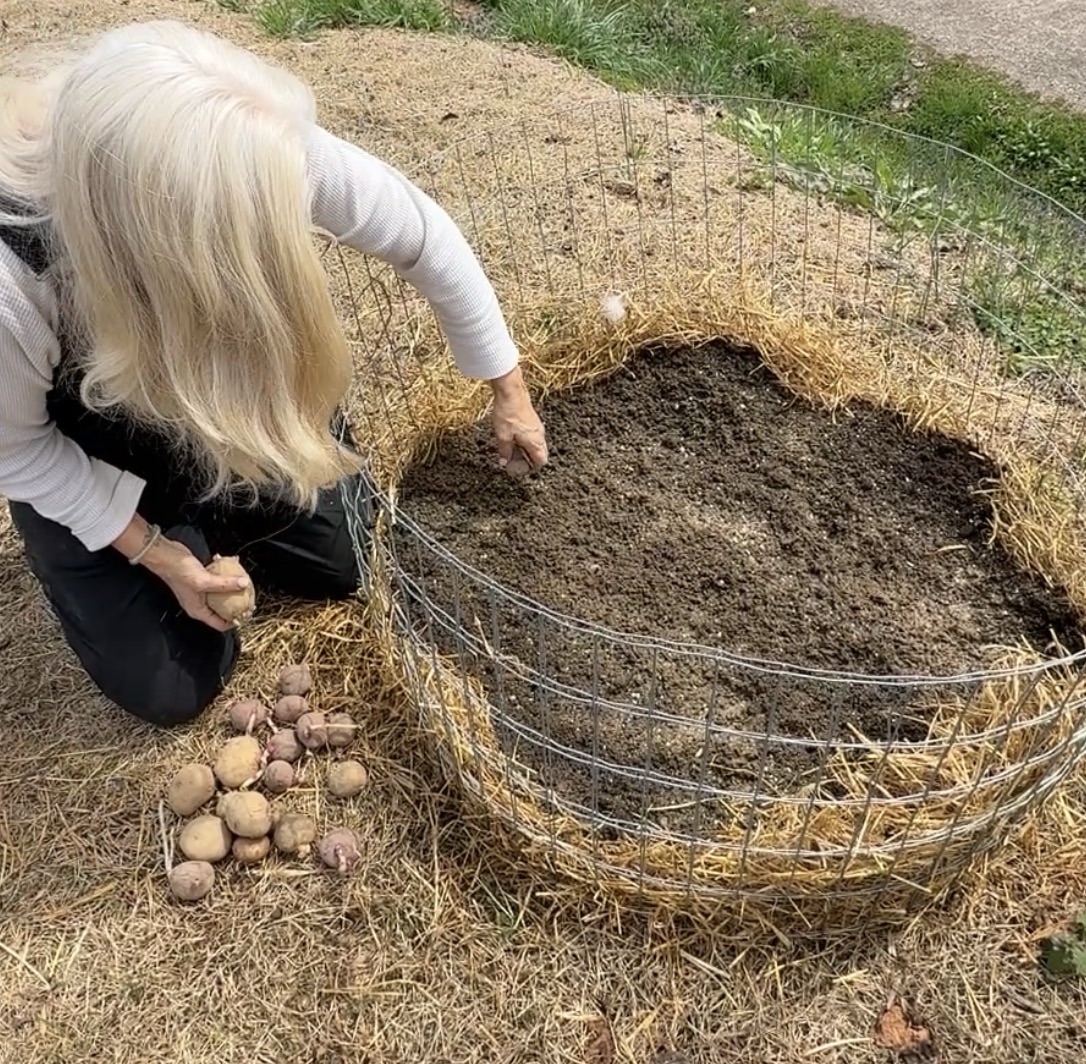
Growing potatoes is one of our favorite jobs in the garden.
Maybe it’s the surprise of what’s happening underground. Maybe it’s how useful they are in the kitchen. Or maybe it’s that moment when you harvest them and realize… you didn’t have to dig up half the garden to find them.
However you slice it, potatoes are worth growing.
Traditional methods can feel like a lot, though. Digging trenches, hilling rows, bending over, and then digging again to harvest.
So a while back, we tried something different.
Last year, we planted potatoes in plastic laundry baskets, and it worked beautifully. Same idea, less digging, easier harvest.
This year, we decided to take that same concept and go a little bigger.
We built simple potato towers out of wire fencing, and I don’t think we’ll go back.
Easy to plant. Easy to manage. And when it’s time to harvest… no digging required.
Now that’s BombDiggity.
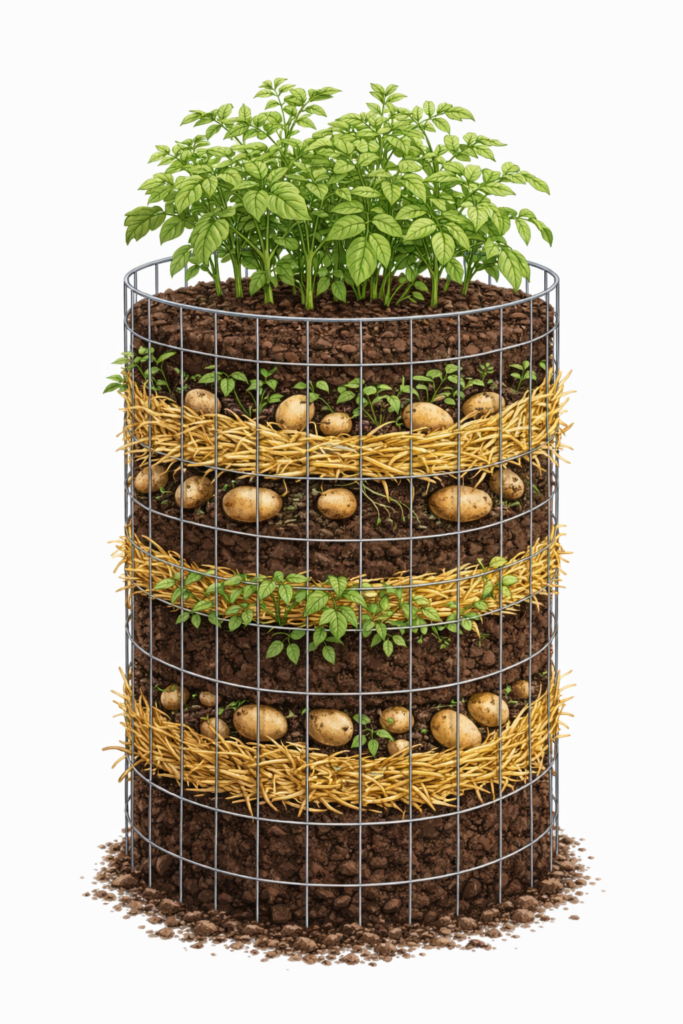
The short version: a potato tower is a ring of wire fencing filled with layers of hay, soil and seed potatoes. You keep adding soil and hay as the plants grow, and at harvest you lift the wire and gather the potatoes with no digging. Plant it 2 to 4 weeks before your last spring frost.
Why This Method Works
Potatoes grow along the buried stems of the plant.
So every time you cover part of the stem with soil as it grows (that’s called hilling), you’re creating more places for potatoes to form.
Instead of spreading out across a garden row, this method lets you grow upward in layers.
It’s efficient, space-saving, and a whole lot easier on your back.
How We Built Ours
We used no-climb or welded wire fencing with smaller openings, not the big wide squares. That helps hold everything in better.
Our towers are about 36 inches across and about 36 inches tall, which ended up being a really nice working size.
To make one tower, you’ll need right around 9 to 10 feet of fencing to create a full circle.
We simply curved the fencing into shape and secured the ends with zip ties, and that was enough to hold everything in place.
Some people like to add a fence post for extra support, and you absolutely can if you want to. But once these are filled with soil and hay, they’re surprisingly sturdy on their own.
You could make yours taller, wider, or even a little skinnier depending on your space.
This is just the size that worked well for us. It’s big enough to grow a good amount of potatoes and still easy to manage.
What We Used
We like to keep things simple and use what we already have on hand.
Here’s what we used:
No-climb or welded wire fencing
Zip ties
Garden soil mixed with compost
Whole seed potatoes
Potato fertilizer
Barn hay
We used barn hay because we have plenty of it, and I’m always happy to use what we already have if it works well.
You could also use straw, dry leaves, mulch, or another loose material as part of your layering.
When to Plant Potatoes in a Tower
Go by your own last spring frost date, not a date on the calendar. Seed potatoes can go in 2 to 4 weeks before it, once the soil is workable and not soggy. For us in East Tennessee, that lands in mid to late March.
Want a fall crop too? Count backward from your first fall frost. Most varieties need about 70 to 120 days to finish, so in a place like ours a fall planting goes in around late July or August. By October it’s too late to start another round outside.
Not sure of your frost dates or zone? Look up your zone by zip code on the USDA Plant Hardiness Zone Map, and check your local average frost dates. If you garden outside the US, the frost-date rule works exactly the same way.
How to Plant Your Potato Tower
Start with a layer of barn hay at the bottom of the tower. This helps keep the soil from falling through the fencing and gives everything a nice base.
Add about 6–8 inches of soil or compost on top of that.
Sprinkle in a little potato fertilizer and lightly mix it into the soil.
Then place your first layer of seed potatoes.
Now, you can cut your seed potatoes into pieces if you’d like, as long as each piece has at least one eye.
I personally prefer to plant whole seed potatoes. I’ve found they’re less likely to rot, and that’s what works best for us. Either way is fine, so do what works for you.
Cover the potatoes with another 4–6 inches of soil, then add a light layer of hay.
Adding a Second Layer
Once your plants grow about 6–8 inches tall, you can add a second layer.
Add more soil, then place another round of seed potatoes. This time, place them around the outer edge of the tower, not directly on top of the first layer.
Cover again with soil and a bit of hay.
This lets you grow more potatoes in the same space without crowding the plants.
Keep Building as They Grow
Every time your plants grow another 6–8 inches, add more soil and hay around the stems.
You’re essentially burying the stems as they grow, which encourages the plant to keep producing potatoes along the way.
It’s the same idea as traditional hilling, just done vertically.
Watering and Care
Potatoes like consistent moisture, but they don’t want to sit in soggy soil.
We water regularly, especially as the weather warms up. The hay helps hold moisture in, which makes a big difference.
If you added fertilizer at planting, you can give them a light feeding again once they’re established, but don’t overdo it. Too much nitrogen gives you beautiful leaves and fewer potatoes.
Keep it simple and stay consistent.
When to Harvest
This is the fun part.
If you like smaller, tender potatoes (we do), you can harvest earlier. These are often called new potatoes, and they’re soft, flavorful, and perfect for roasting or simple dishes.
If you want larger potatoes for storage, let the plants continue growing until they start to yellow and die back.
And when it’s time to harvest…
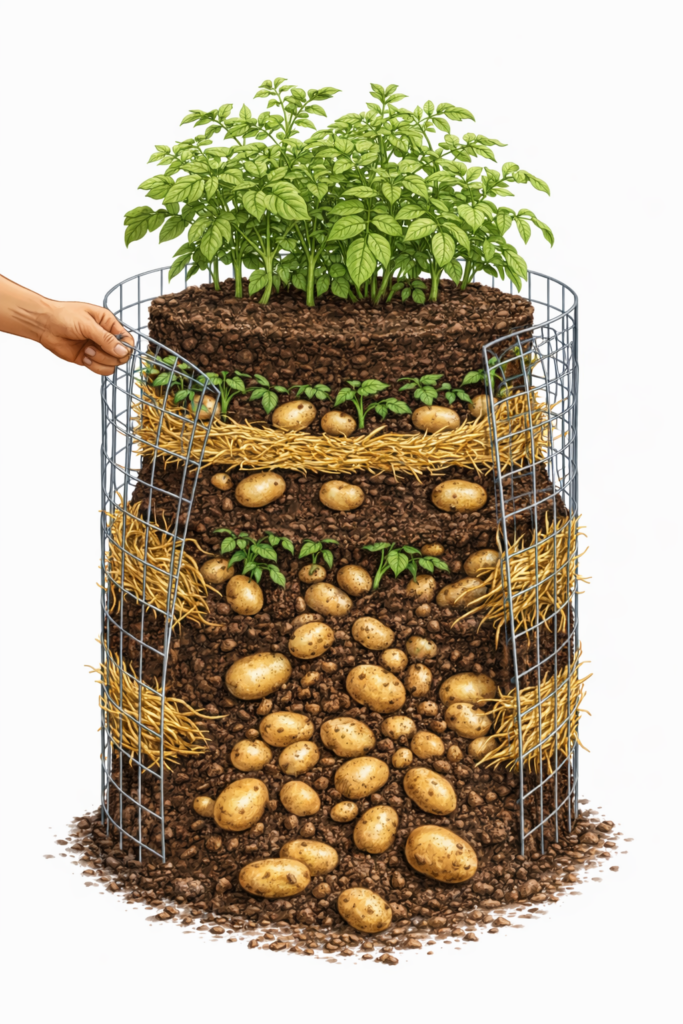
No digging.
Just open or lift the wire fencing and gather your potatoes right out of the layers.
It’s one of the most satisfying harvests you’ll have.
Our Fall Harvest
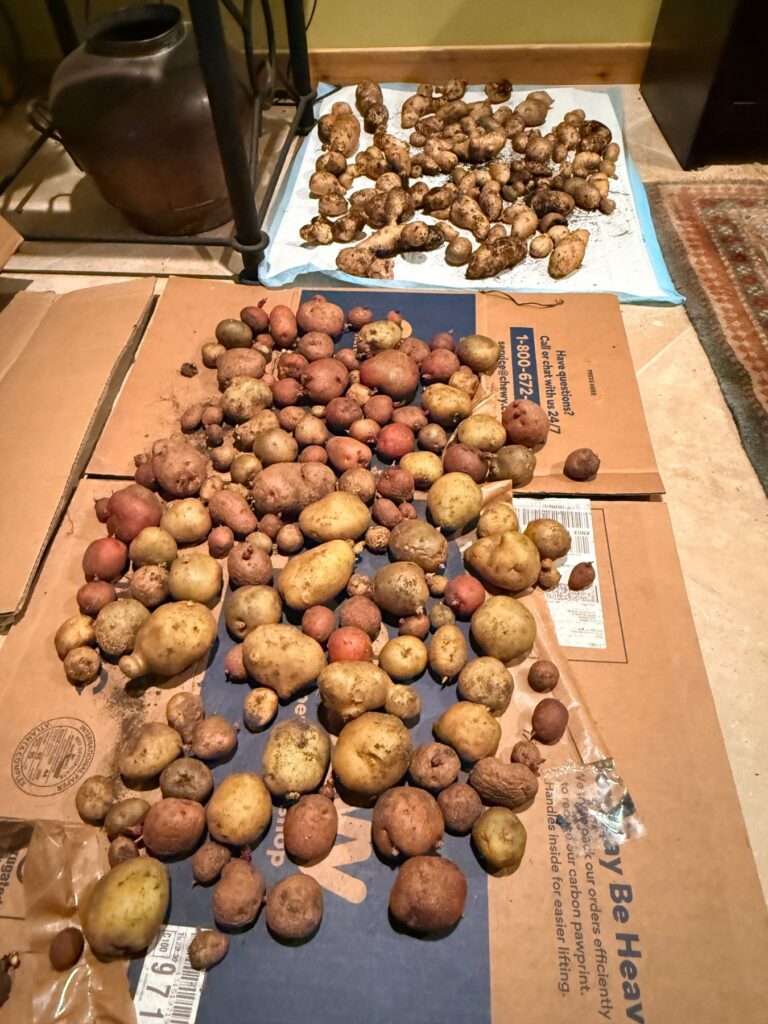
Two wire towers gave us more than 20 pounds of potatoes this year. That is better than 10 pounds from each ring, in a footprint about 3 feet across.
And we never picked up a shovel. We lifted the wire, pulled back the hay, and gathered them right out of the layers.
Curing and Storing Your Potatoes
If you’re keeping potatoes for storage, let them cure first. Spread them out in a cool, dark, airy spot for a week or two so the skins toughen up.
Brush off the dirt, but don’t wash them until you’re ready to cook. Store them somewhere dark and cool, but not in the fridge. Keep them out of the light so they don’t turn green, and keep them away from onions. Eat any nicked or bruised ones first, because they won’t keep as long.
A Few Things We’ve Learned
Use soil mixed with compost for best results
Keep your hay loose so water and air can move through
Place your second layer around the edges, not directly on top
Try not to go much taller than 2–3 feet so everything stays manageable
Why We Love This Method
This is one of those garden projects that just makes sense.
It’s simple. It’s productive. And it takes something that can feel like a chore and turns it into something enjoyable.
We started with laundry baskets.
Now we’re growing into something a little bigger.
Same idea. Same simplicity. Just more potatoes.
And that’s always a good thing.
Easy to plant. Easy to harvest.
Now that’s BombDiggity.
Potato Tower Questions
When should I plant potatoes in a wire tower?
Plant 2 to 4 weeks before your last spring frost, once the soil is workable. For a fall crop, count back 70 to 120 days from your first fall frost.
How do I know when potatoes are ready to harvest?
For tender new potatoes, start gathering a few once the plants flower. For storage potatoes, wait until the tops yellow and die back.
Can I plant potatoes in the fall?
Only if you have about 70 to 120 frost-free days left before your first fall frost. In zone 7 that means planting around late July or August.
How big should a potato tower be?
Ours are about 36 inches across and 36 inches tall, made from 9 to 10 feet of welded or no-climb wire fencing. Try not to go much taller than 2 to 3 feet of soil so it stays manageable.
Do I need to cure potatoes before storing them?
Yes. Let them dry in a cool, dark, airy spot for a week or two so the skins toughen, then store them somewhere dark and cool, but not in the fridge.
Whether a tower works for you depends on your variety, so start with determinate versus indeterminate potatoes. For the traditional method, here is our potato planting guide.
Planning your vegetable garden? Our Growing Vegetables guide brings all of our crop, heirloom, soil and seed starting posts together, and Garden by the Season shows what to do and when.


Written by
Lane and Jules Morris
Authors and University of Tennessee faculty writing from our farm in East Tennessee about gardening, the farm kitchen, faith and designing a flourishing life at any age. More about us
