
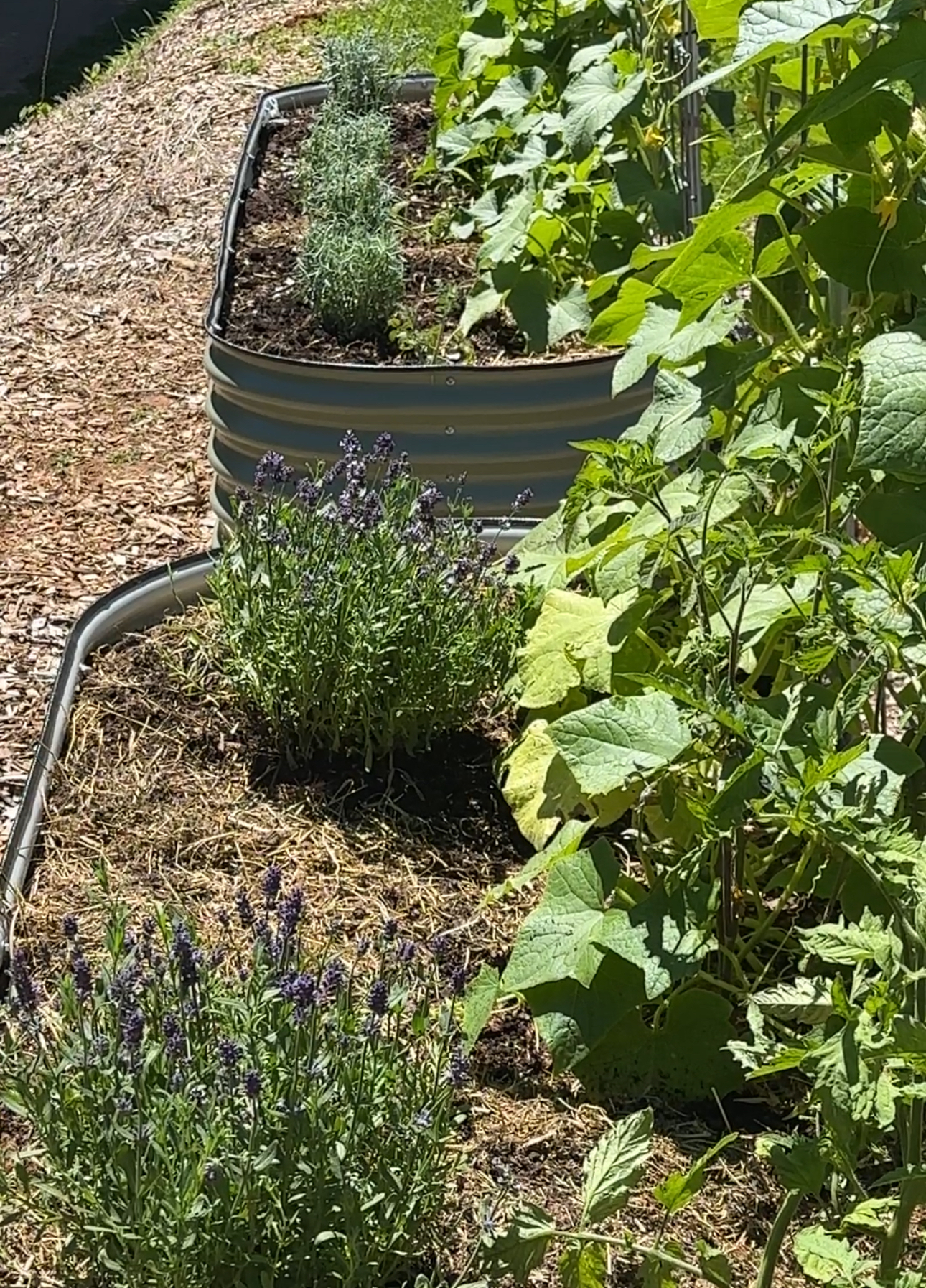
Lavender does not die of cold in East Tennessee. It dies of wet feet. Full sun and soil that drains hard are the only two things it truly demands, and a raised bed gives you both without a fight. Get those right and the rest is easy.
We have lavender tucked all over the farm, and it is always happiest in a raised bed. People came by our booth at the Homestead Festival saying “I cannot get lavender to grow,” over and over. It got me thinking about why ours does, and it is not luck. It is drainage.
Why raised beds fix lavender
- Drainage. Lavender rots in ground that stays wet, especially over winter. A raised bed sheds water instead of holding it. Work in gravel or coarse sand for extra insurance.
- Soil control. You decide what it grows in rather than arguing with clay. A sandy mix with some compost is close to perfect. Do not make it rich, because lavender grown soft flops and rots.
- Airflow. Raised plants sit up in moving air, and humidity sitting in the foliage is what kills lavender in the South as surely as wet roots.
- Fewer weeds, which means less fussing around the crown.
Mulch around the plants but keep it off the stems. Gravel is the traditional choice because it reflects heat and stays dry. We used hay one year and it worked, though anything that holds moisture against the crown is a compromise.
Pick a variety that survives your winter
This is the mistake nobody tells you about. Lavender is sold by looks, not by hardiness, and the prettiest one at the garden center is often the one that will not make it to spring.
- English lavender (Lavandula angustifolia). The hardy one. Munstead and Hidcote are the reliable names. This is what you want in the ground here.
- Lavandin (Lavandula x intermedia). Grosso and Provence. Bigger plants, long stems, the best for drying. Nearly as hardy as English.
- Spanish lavender (L. stoechas), the one with the rabbit-ear petals on top, and French lavender (L. dentata). Beautiful and much less cold hardy. Treat them as container plants you bring in, not as permanent residents.
Growing and pruning
- Full sun. Six hours minimum. Shade gives you a leggy plant that never smells like much.
- Space them generously. Crowding traps humidity, and humidity plus poor airflow is what takes lavender down in summer here.
- Water new plants until established, then mostly stop. Established lavender prefers drought to kindness.
- Do not feed it. Rich soil and fertilizer produce floppy growth and weak scent.
- Do not cut it back in fall. Wait until you see new growth in spring, then prune.
- Never cut into bare old wood. Lavender does not resprout from it. Always leave green growth below your cut, and prune a little every year so the plant never gets woody and bare in the middle.
Harvesting and drying
Cut the stems just as the first flowers on the spike begin to open. That is when the scent is strongest, and waiting until the spike is fully open costs you fragrance. Cut in the morning after the dew dries, bundle loosely, and hang upside down somewhere dark, dry and airy.
Why we grow so much of it
The scent is the reason most people plant lavender, and it earns that. It is calming in a way that is hard to argue with, it is the classic thing to tuck near a bedroom window or into a drawer, and it is lovely in the kitchen and in soaps and salves. Pollinators work it all day long. It holds its fragrance for months once dried, which is more than most of what we grow can say.
Lavender questions we get asked
Why does my lavender keep dying?
Wet roots, nine times out of ten. Lavender tolerates cold far better than it tolerates soggy ground, and winter wet is what kills it. Improve drainage or move it to a raised bed before you try anything else.
Which lavender is hardiest?
English lavender, Lavandula angustifolia. Munstead and Hidcote are the dependable ones. Spanish lavender with the little rabbit ears is the pretty one at the garden center and the one least likely to survive a real winter.
When should you prune lavender?
Spring, once you see new growth starting. Never in fall. Pruning late leaves soft new growth going into winter and opens the plant to rot.
Can you cut lavender back hard?
Not into bare wood. Lavender will not resprout from old woody stems, so always leave green growth below your cut. Prune lightly every single year and you never face the choice.
Does lavender need fertilizer?
No, and feeding it usually makes things worse. Lean soil gives you a compact plant with strong scent. Rich soil gives you a floppy plant that smells of very little.
How far apart should lavender be planted?
Far enough that the plants never touch at full size. Air needs to move between them. Crowding in a humid Southern summer is a reliable way to lose the whole row.
When do you harvest lavender for drying?
As the first few flowers on each spike open. That is peak fragrance. Cut in the morning once the dew has dried, then hang small bundles upside down somewhere dark and airy.
Does lavender come back every year?
English lavender and lavandin are perennial here and will live for years in the right spot. Spanish and French types usually will not survive the winter in the ground in Zone 7.
Is lavender deer resistant?
Yes, and reliably so. Deer avoid strongly aromatic foliage, which makes lavender one of the safer things to plant where they browse.
If drainage is your problem across the whole garden and not just with lavender, our composting guide covers building soil that drains, and the spring garden planning guide is where to work out where things go.


Written by
Lane and Jules Morris
Authors and University of Tennessee faculty writing from our farm in East Tennessee about gardening, the farm kitchen, faith and designing a flourishing life at any age. More about us
