

Zinnias are annuals, so the plant itself will not come back after frost. But they are the easiest seed in the garden to save, and they drop plenty on their own, so once you grow them you rarely buy them again. Sow them in full sun after your last frost, cut them hard and often, and let a few of the best ones dry on the stem in fall. That is most of it.
We grow zinnias in the test gardens every year and they have never once disappointed us. They handle East Tennessee heat without complaint, they bloom until frost, the pollinators work them all day, and they cost almost nothing after the first packet. This is everything we have learned about growing them, cutting them so they keep producing, and saving the seed.
Do zinnias come back every year?
Not from the root. Zinnias are true annuals. One hard frost ends the plant, and no amount of mulch will change that.
What they do instead is reseed. If you leave a few spent blooms standing through fall, seed drops where the plant stood and volunteers come up on their own the next spring. They will not be as tidy or as evenly spaced as a row you sowed on purpose, but they are free and they are usually strong.
The more reliable version is to save the seed yourself, which takes about ten minutes and is covered further down. Between the volunteers and the envelope in the drawer, one packet really can last you the rest of your gardening life.
When to plant zinnias
Zinnias want warm soil. Around 70 degrees is where the seed is happy, which here in Zone 7 means sometime after our last frost in mid April. Planting into cold ground gets you slow, sulky seedlings that never catch up to the ones sown two weeks later.
- Direct sow. Zinnias resent being moved, and direct-sown plants usually overtake transplants by midsummer. Quarter inch deep, then keep the bed damp until they are up.
- Thin at three inches tall. This is the step everybody skips, us included some years. Crowded zinnias are mildew waiting to happen.
- Expect eight to twelve weeks to the first bloom from a direct sowing. Sow in late April and you are cutting by July.
- Sow again every two or three weeks through about the middle of summer. One planting gives you one wave. Three plantings give you flowers from July until frost, because the youngest patch is always the one throwing the best stems.
If you want flowers before the zinnias are ready, our field guide to cool weather flowers covers what fills that gap, and the spring garden planning guide is where to work out the timing for your own beds.
Where to put them, and how far apart
Full sun. Six hours minimum, eight is better. Zinnias in part shade get leggy, bloom less, and stay damp longer, which brings on the one disease they are prone to.
Well-drained soil. They are not fussy about fertility, but they will rot in a low spot that holds water.
Spacing, by size:
- Dwarf types: 8 to 9 inches apart
- Tall cutting types: 12 inches apart
- Between rows: 12 to 18 inches
It feels wasteful when the seedlings are two inches tall. It does not feel wasteful in August. Spacing is not really about room to grow, it is about moving air through the planting, and moving air is how you keep powdery mildew off the leaves.
How to cut zinnias so they keep blooming
This is the part that changes everything, and it is the opposite of what most people do. Zinnias are a cut-and-come-again flower. Cutting is not taking from the plant, it is what tells the plant to make more. A zinnia you never cut will make a few flowers, set seed, and quit. A zinnia you cut every few days will keep going until frost kills it.
The wiggle test
We learned this one from Floret Flower Farm and it is the single most useful thing we know about zinnias.
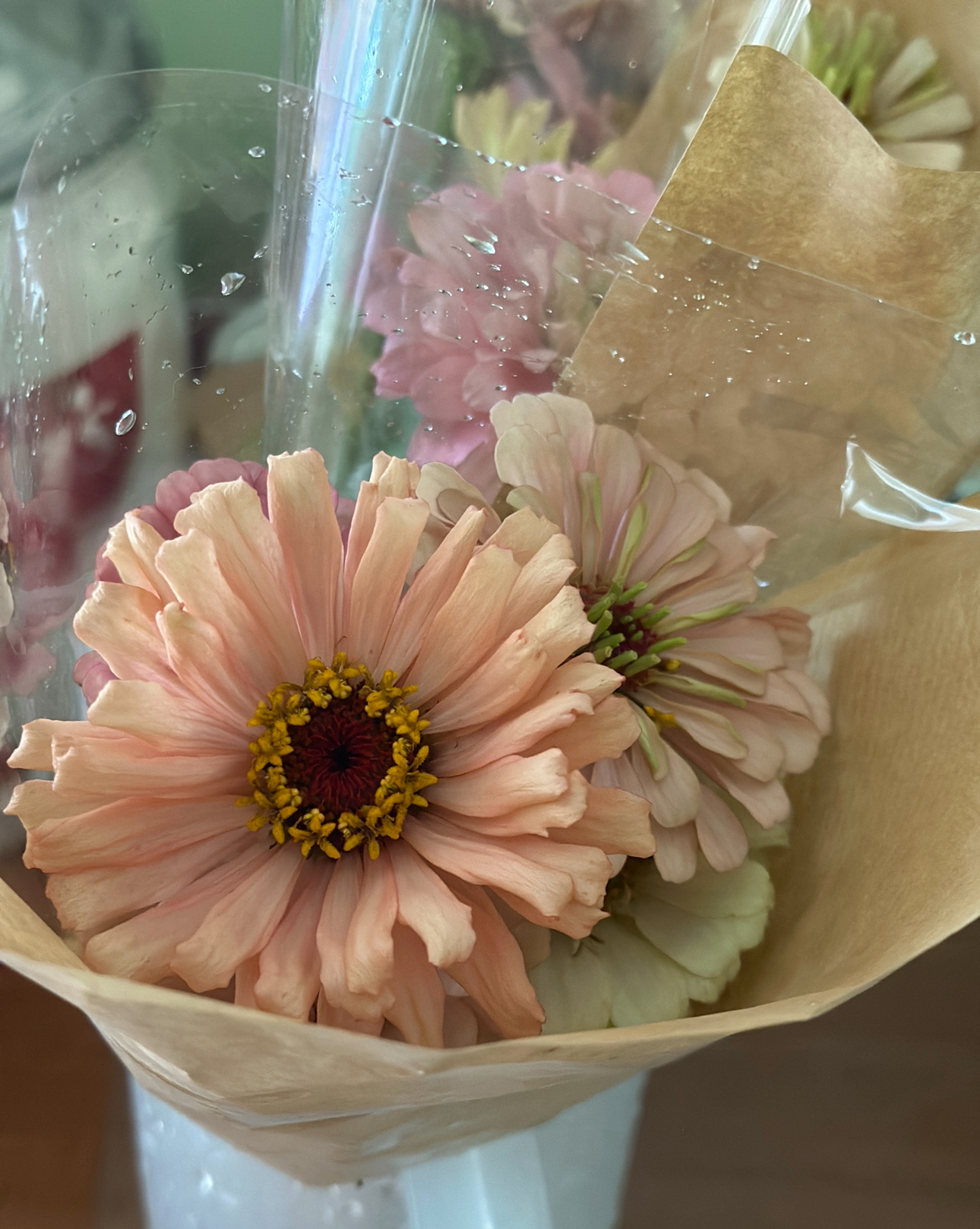
Before you cut, take the stem a few inches below the flower and give it a gentle wiggle. If the stem flops and waves around, the bloom is not ready. Leave it. If the stem feels firm and stiff and the whole thing moves as one piece, cut it.
A wobbly stem in the vase goes limp in a day. A firm one holds up for a week or more. Same flower, same plant, entirely different vase life, and the only difference is whether you waited.
Where to make the cut
Go deep and cut back to just above a leaf node, not a few inches under the flower. The plant branches from that node and sends up two new stems where you took one. Cutting short leaves you a brown stub and a shorter stem for the vase.
Cut in the early morning while the plant is full of water, use clean sharp snips, and get the stems into a bucket of water as you go rather than carrying an armload around the garden.
Deadheading is the same job by another name. Any bloom going brown should come off, cut the same way, whether it ends up in a vase or the compost pile.
Pinch them once when they are young
When a plant is eight to twelve inches tall, take the top few inches off. It feels wrong and it costs you about ten days. What you get back is a plant that branches low and throws many long stems instead of one thick central stem with a single flower on top.
Honest confession: we do not always get to this. We try. The pinched ones are noticeably better, and every year we mean to do all of them. The full list of what to pinch and when is in the pinch list.
Water and feeding
About an inch a week, at the base of the plant. Never overhead. Wet zinnia leaves are how powdery mildew starts, and a sprinkler at dusk is the worst thing you can do to a zinnia patch.
Mulch around the base to hold moisture and keep the weeds down. Zinnias do not need rich soil or heavy feeding. We use a natural fertilizer or compost tea from the farm every four to six weeks, and that is plenty.
Powdery mildew: the one real problem zinnias have
Late in the season the lower leaves get a grey-white dusty film, then go brown and crisp from the bottom up. That is powdery mildew, and if you grow zinnias long enough you will meet it. It rarely kills the plant, but it makes the patch ugly in exactly the weeks you want it beautiful.
Everything that prevents it is something you do early:
- Space them properly and thin them. Air circulation is the whole ballgame.
- Water the soil, not the leaves. Water in the morning so anything that does get wet dries fast.
- Full sun. Sun dries leaves. Shade keeps them damp.
- Strip the lowest leaves once plants are established, so nothing touches the soil.
- Pick a resistant series if you have fought it before. Oklahoma, Profusion, Dreamland and State Fair Giant all hold up better than most.
Once it is there, cut off the worst leaves and improve the airflow. Do not compost badly infected foliage.
Give the tall ones something to lean on
Anything over about two feet will lie down in a thunderstorm, and East Tennessee gets plenty of those. Stakes work. Flower netting stretched horizontally over the bed early in the season works better, because the plants grow up through it and hold each other upright without you ever tying anything.
Zinnia varieties worth growing
The short version: if you want flowers for a vase, grow a tall series. If you want color along a walkway, grow a dwarf one. Growing a three-foot cutting zinnia as a bedding plant is the most common zinnia mistake there is.
| Series | Height | Best for | Mildew |
|---|---|---|---|
| Benary’s Giant | 3 to 4 ft | The florist standard. Big doubles, long strong stems. | Average |
| Oklahoma | 30 to 40 in | Smaller flowers, tons of them. Wonderful mixer. | Resistant |
| California Giant | 3 to 4 ft | The old heirloom. Open-pollinated, so seed comes true. | Average |
| State Fair Giant | 3 ft | Large, sturdy, forgiving. Good beginner cutting zinnia. | Resistant |
| Queen series | 30 to 40 in | Lime, blush, red lime. The moody antique colors. | Average |
| Profusion | 12 to 18 in | Landscape workhorse. Blooms without deadheading. | Resistant |
| Lilliput / Swizzle | 12 to 14 in | Little button pompoms. Charming in short jars. | Average |
| Thumbelina | 6 in | Edging and pots. Too short to cut. | Average |
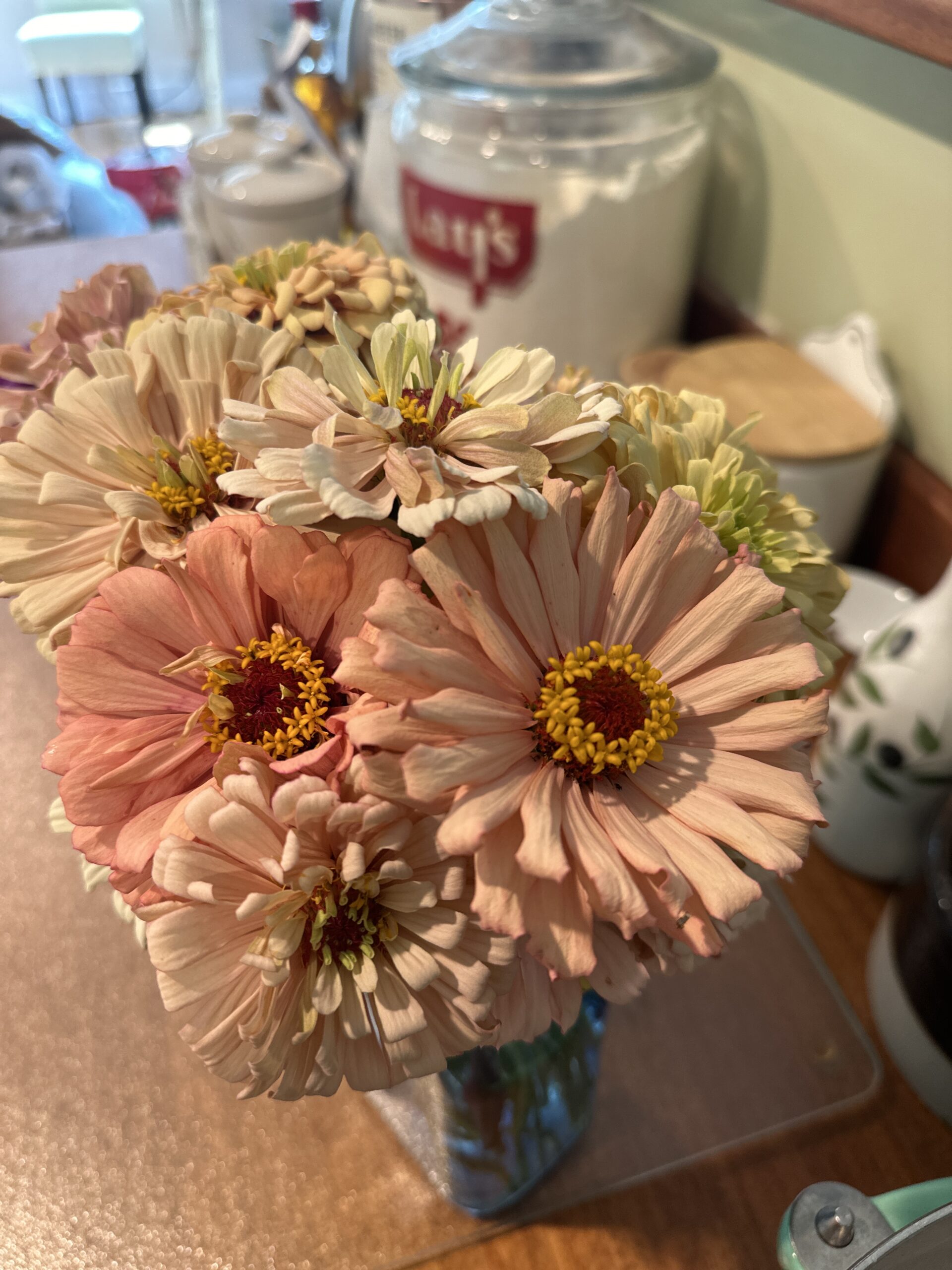
The ones that made us fall in love were the specialty collections from Floret Flower Farm. We have grown their Precious Metals, Dawn Creek Pastels and Victorian Wedding collections, plus a few of the Apenglow varieties, and they are not everyday zinnias. Dusty rose, bronze, antique peach, colors you do not expect from a flower most people think of as loud.
How to save zinnia seeds
Zinnias are the easiest seed in the garden to save, and they earn their place on that list. No fermenting, no special equipment, no real skill. Stop cutting a few of your best plants in late summer and let them do the rest.
- Wait until the bloom is completely dry and crunchy. Brown, brittle, petals that crumble at a touch. A flower that is merely wilted is not ready, and seed picked early will not sprout.
- Pull the dried head apart. At the base of each petal is a little arrowhead-shaped seed. Once you find the first one you will see them everywhere.
- Winnow off the chaff. Tip everything into a shallow bowl and blow gently across the surface. The light papery bits drift off, the heavier seed stays. Gently is the operative word.
- Dry them another week on a paper towel or tray. This is the step that keeps them from molding in the envelope.
- Store cool, dark and dry. Labeled envelopes or an airtight jar with a silica packet. Zinnia seed stays good for three to five years.
Will the seed come back the same?
Mostly, with one honest caveat. Open-pollinated varieties like California Giant come true year after year. But bees work zinnias hard, and if you grow several varieties near each other they will cross. Commercial growers isolate varieties by half a mile to keep a strain pure, which nobody with a home garden is going to do.
In practice that means your saved seed will drift a little toward the middle of whatever you grew. We think that is a feature. You end up with a strain that is yours. If you want one variety to stay exactly itself, save from a year you grew it alone, or buy that one fresh and save everything else.
Seed saved from an F1 hybrid is the real gamble. It will grow, but the offspring scatter back toward the parents and you may not get what you had. The rest of what we put up each fall is in our guide to saving seeds.
A zinnia season, month by month
Timed for Zone 7 here in East Tennessee. Shift it by a couple of weeks either direction for your own frost dates.
| When | What to do |
|---|---|
| February to March | Order seed, or pull your own envelopes out of the drawer. Decide how much room you are giving them, then give them more. |
| Mid to late April | After last frost, once soil is near 70 degrees. Direct sow a quarter inch deep. |
| Early May | Thin to spacing at three inches tall. Sow your second succession. |
| Late May | Pinch at eight to twelve inches. Get netting or stakes in before they need them. |
| June | Third succession sowing. Mulch. Water at the base. |
| July to September | Cut, cut, cut. Wiggle test every stem. Feed every four to six weeks. |
| Late August | Choose your seed plants and stop cutting them. |
| October | Collect dry heads. Keep cutting the rest right up to frost. |
| After frost | Pull the spent plants. Leave a few standing if you want volunteers next spring. |
Zinnia questions we get asked
Do zinnias come back every year?
Not from the root. Zinnias are annuals and frost ends them. They reseed themselves readily, though, so a patch left standing in fall often comes up on its own the next spring.
Should you deadhead zinnias?
Yes, and the more the better. Zinnias are cut-and-come-again. Removing spent blooms stops the plant setting seed and tells it to make more flowers. Cut back to just above a leaf node rather than snipping right under the flower.
How do you know when a zinnia is ready to cut?
Use the wiggle test. Hold the stem a few inches below the flower and wiggle it. A floppy stem means the bloom is not mature, so leave it. A firm stem that moves as one piece is ready and will last a week or more in a vase.
Why are my zinnia leaves turning white?
That is powdery mildew, and it is the one disease zinnias reliably get. It comes from crowding, overhead watering and shade. Space plants properly, water at the base in the morning, and choose a resistant series like Oklahoma or Profusion if it keeps happening.
Can you grow zinnias in pots?
Yes, if you pick a short series. Thumbelina, Lilliput or Profusion are built for containers. A three-foot cutting variety in a pot will flop and disappoint you.
Do zinnias need full sun?
Six hours minimum, eight is better. In part shade they stretch, bloom less, and stay damp long enough to invite mildew.
How long do zinnias take to bloom from seed?
Eight to twelve weeks from direct sowing. Sow in late April and you are cutting by early July.
Do zinnia seeds come back true to type?
Open-pollinated varieties do. Bees cross zinnias readily, so if you grow several varieties together your saved seed will drift toward a blend. Seed saved from an F1 hybrid is unpredictable.
Are zinnias good for pollinators?
Very. Butterflies, bees and hummingbirds all work them, and the single-flowered types are easier for insects to feed from than the tight doubles.
Why we keep growing them
Zinnias ask for almost nothing and hand back an armful of flowers every few days from July until the first hard freeze. They do not mind the heat, they do not need rich ground, and the seed is free forever once you start saving it.
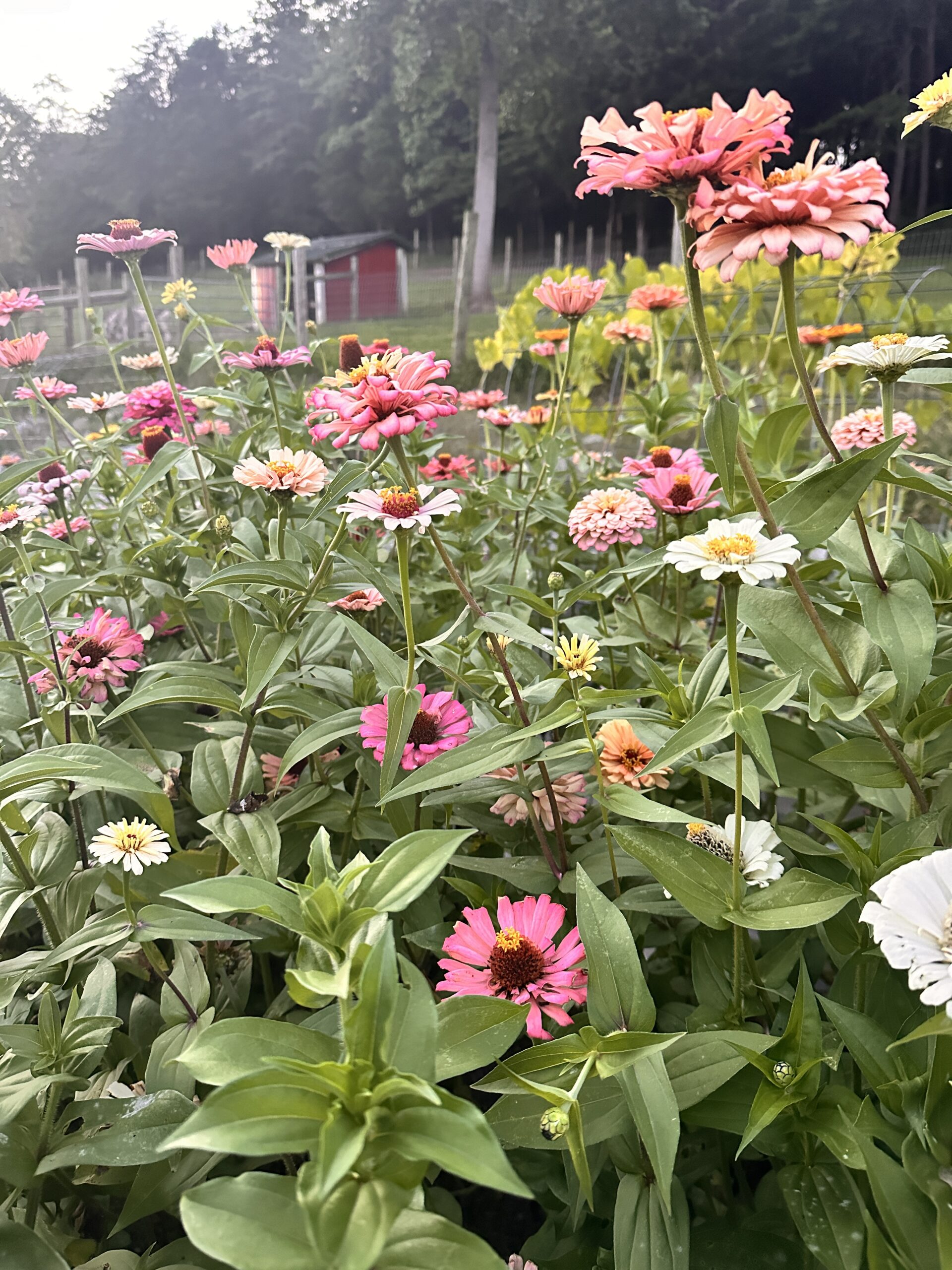
We keep expanding the planting every year. A whole field of them is not off the table.
If you are putting the garden to bed around them, our mum guide covers what carries the color on after the zinnias are gone.
Growing more flowers? Our Growing Flowers guide brings all of our flower guides together in one place, from dahlias and zinnias to cool weather blooms and arranging.


Written by
Lane and Jules Morris
Authors and University of Tennessee faculty writing from our farm in East Tennessee about gardening, the farm kitchen, faith and designing a flourishing life at any age. More about us
