
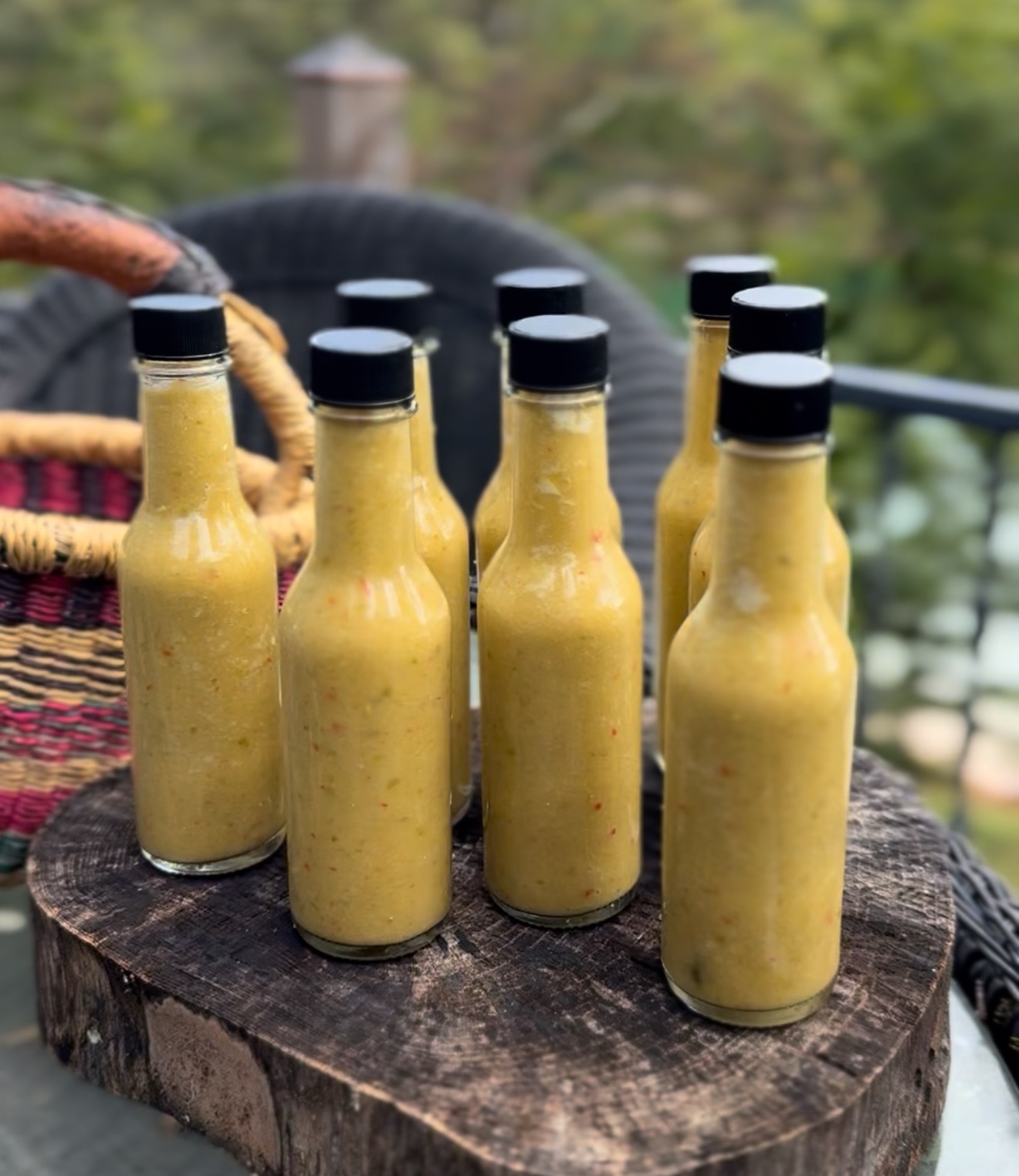
The short version: this hot pepper sauce is a cooked vinegar sauce, ready the same day. Sauté a pound of mixed hot peppers with onion and garlic, simmer them in apple cider vinegar with honey and salt for 15 to 20 minutes, blend smooth, bottle it and keep it in the fridge.
When heirloom peppers come in by the basketful, I start looking for every way to use them. This year I’ve roasted them, dried them, stuffed them, and still had more to go. That’s when I turned to hot sauce: simple, fresh, and full of flavor. With just peppers, honey, Redmond salt, and apple cider vinegar with the mother, you get a sauce that’s bold, clean, and free from anything artificial. Best of all, it will keep for months in your fridge, ready to splash onto everything from tacos to eggs.
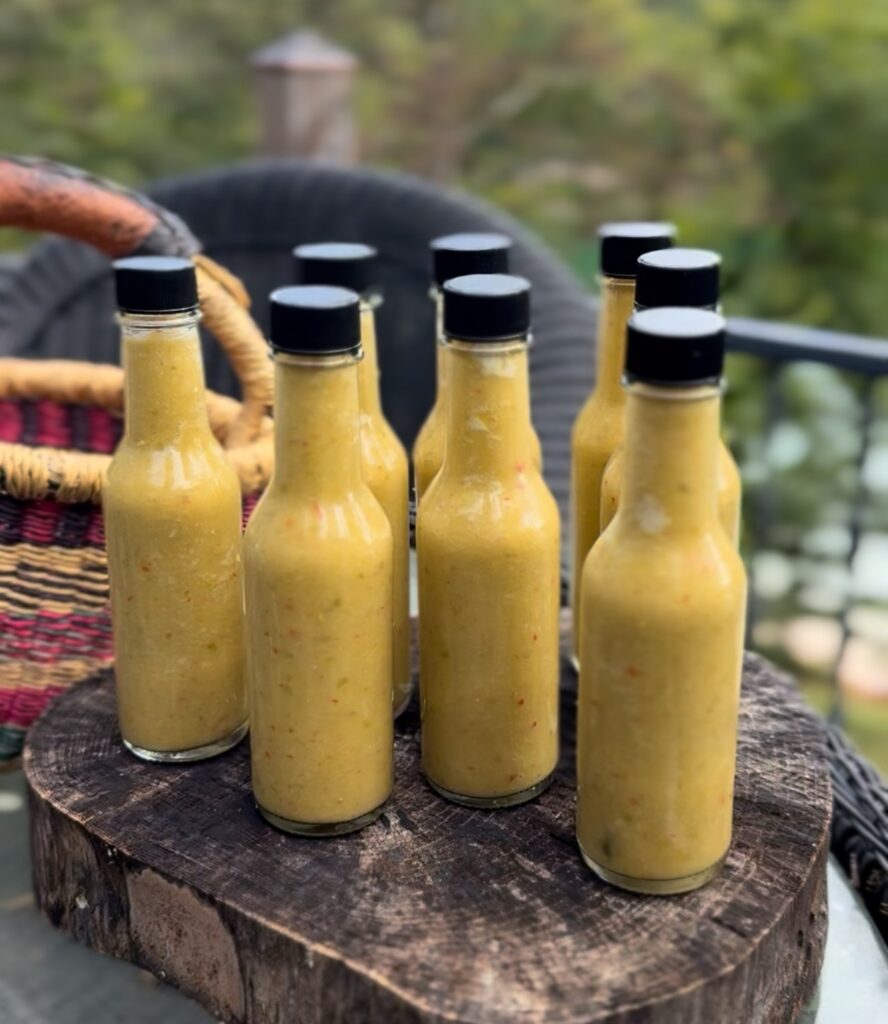
BombDiggity Blaze Hot Pepper Sauce Recipe

With just peppers, honey, Redmond salt, and apple cider vinegar with the mother, this sauce is bold, clean, and free from anything artificial. Best of all, it will keep for months in your fridge, ready to splash onto everything from tacos to eggs.
- Prep Time: 30 min
- Cook Time: 15-20 min
- Total Time: 0 hours
- Yield: 4 bottles
- Category: Sauce
Ingredients
- 1 pound mixed hot peppers (heirloom if you have them, any variety works)
- ½ onion, chopped
- 4–5 garlic cloves, peeled
- 2 cups apple cider vinegar with the mother
- 2 tablespoons honey
- 1 tablespoon Redmond salt
- Splash of olive oil for sautéing
Instructions
- Remove stems from the peppers.
- Roughly chop them, keeping the seeds if you want more heat.
- In a large pan, sauté the peppers, onion, and garlic in a splash of olive oil until softened and fragrant.
- Add apple cider vinegar, honey, and Redmond salt. Stir and bring to a gentle simmer.
- Cook for 15–20 minutes until the peppers are very soft.
- Cool slightly, then transfer to a blender.
- Blend until smooth. For a thinner sauce, strain through a fine sieve. For a thicker sauce, leave as is.
- Pour into clean glass bottles or jars, seal, and refrigerate.
Notes
Keeps for months and goes on just about anything. ENJOY!
How hot is this hot pepper sauce?
The heat depends entirely on the peppers you use. Jalapeños and Fresnos make a sauce most people can pour freely. Add habaneros or Scotch bonnets and it becomes a few-drops sauce. A mix of mild and hot peppers gives you plenty of flavor without blowing out the heat, and keeping the seeds and ribs in pushes it hotter. Taste a sliver from each kind of pepper before you cook, because heat varies from plant to plant.
Picking peppers for hot sauce
Any ripe hot pepper works. Red, fully ripe peppers give a sweeter, rounder sauce and a brighter color, while green peppers taste sharper and grassier. Mixing colors gives you an orange or rust colored sauce, which is part of the fun. Wear gloves when you stem and chop, and keep your hands away from your eyes.
Ways to use it
Splash it on eggs, tacos, beans, soups and greens. Stir a spoonful into mayo for a spicy spread, or whisk it with olive oil for a quick marinade. The honey makes it especially good on roasted vegetables and wings. For more from the garden and the kitchen, browse our recipes.
Hot pepper sauce FAQ
How long does homemade hot pepper sauce last?
Kept in clean, sealed bottles in the fridge, this vinegar-based sauce keeps for months. The vinegar is what makes it last; this guide to refrigerating hot sauce explains why. If a bottle ever smells off, grows mold or turns fizzy, toss it.
Do I have to strain it?
No. Strain it through a fine sieve for a thin, pourable sauce, or leave it as is for a thicker sauce with more body.
Is this a fermented hot sauce?
No. It is a cooked vinegar sauce, so it is ready to use the same day you make it.
Can I can it for the pantry?
This recipe is written for the fridge. Shelf-stable canning calls for a tested recipe, so keep this one cold.
This little bottle is the kind of sauce that finds its way to the table almost every meal. It’s proof that simple ingredients: peppers, honey, vinegar, and good salt, can create something extraordinary. I hope you try it and love it as much as we do. Now that’s BombDiggity.
The same peppers also become cowboy candy and a jar of slow burn seasoning for the spice cabinet.
Growing more of your own food? Our Growing Vegetables guide brings all of our vegetable, heirloom and soil posts together in one place.


Written by
Lane and Jules Morris
Authors and University of Tennessee faculty writing from our farm in East Tennessee about gardening, the farm kitchen, faith and designing a flourishing life at any age. More about us
